
From Locked Data to Open Platform: Public API and AI Integration for a Community Platform
To turn a closed community platform with fragmented auth, fragile releases, and no path to partners or AI into an open, AI-ready ecosystem, Ardas team rebuilt GroupOS's core architecture and delivery pipeline to safely expose customer data at scale, across a multi-tenant platform with 350+ SaaS integrations serving ticketing, membership, and content tools for event-based organizations.
Through a phased transformation, from security and release hardening to a public API platform to an AI-augmented delivery pipeline, GroupOS became a secure, fast-shipping engineering organization built to scale without scaling headcount.
Technical stack includes:
- Backend: Node.js, NestJS, TypeScript, Express, MongoDB Atlas, Stripe, Firebase Auth
- Frontend: React, Vite, TypeScript, Flutter (mobile)
- Cloud & DevOps: AWS (ECS Fargate, CloudFront, S3, SQS, Lambda), Terraform, Docker, GitHub Actions
- Observability: Grafana, Loki, Tempo, Mimir, OpenTelemetry, Sentry
- Testing & Quality: Playwright, Stryker (mutation testing), automated CI quality gates
- AI Engineering: Anthropic Claude agent fleet, MCP, OAuth 2.1, GitNexus (code-graph analysis)
- Architecture: Domain-driven design, OpenAPI-first, multi-tenant, event-driven
Our Client
GroupOS is a community platform company building an all-in-one solution for event-based businesses, from professional associations to membership organizations. It combines events, community, and content tools to help organizations run their entire member experience without juggling multiple disconnected apps.
About the Product
A white-labeled community and event management platform offering ticketing, membership tiers, in-app messaging, and content hosting, delivered through custom-branded mobile and web apps with 350+ SaaS integrations. Each community runs on its own branded domain on a multi-tenant architecture, now extended with a public API and AI integration layer.
Initial Challenges
- Scaling pains: a sprawling multi-service codebase made every change risky, with slow, manual-heavy releases
- No public API: customer data was locked inside the product, with no path to partners or the AI-agent ecosystem
- Fragmented auth: two identity providers and shared-secret sessions across five services
- Recurring incidents: payment edge cases and data-integrity bugs, with little observability to catch them early
- Fragile release train: a multi-repo flow prone to human error and hotfix divergence
- Lean team, enterprise expectations: enterprise-grade delivery speed needed without enterprise headcount
Provided Solution
- New public API platform: OpenAPI-first, domain-driven (NestJS + TypeScript), guarded by 95% coverage gates and mutation testing
- AI-native integration layer: OAuth 2.1 + an MCP server with 75+ tools, plugging Claude/ChatGPT-class assistants into events, members, and content
- Security hardening: single identity provider, redesigned cross-service JWT/session topology, tenant-isolation and injection findings closed
- Full observability: Grafana, Loki, Tempo, Mimir, and Sentry, correlating logs, traces, and metrics across every service
- Industrialized releases: Git Flow across the repo fleet, dual-PR hotfix playbooks, preprod simulation before promotion
- AI-augmented delivery pipeline: Claude-powered agents plan, build, verify, and review under automated quality gates; humans hold the merge button
Key Product Features
-
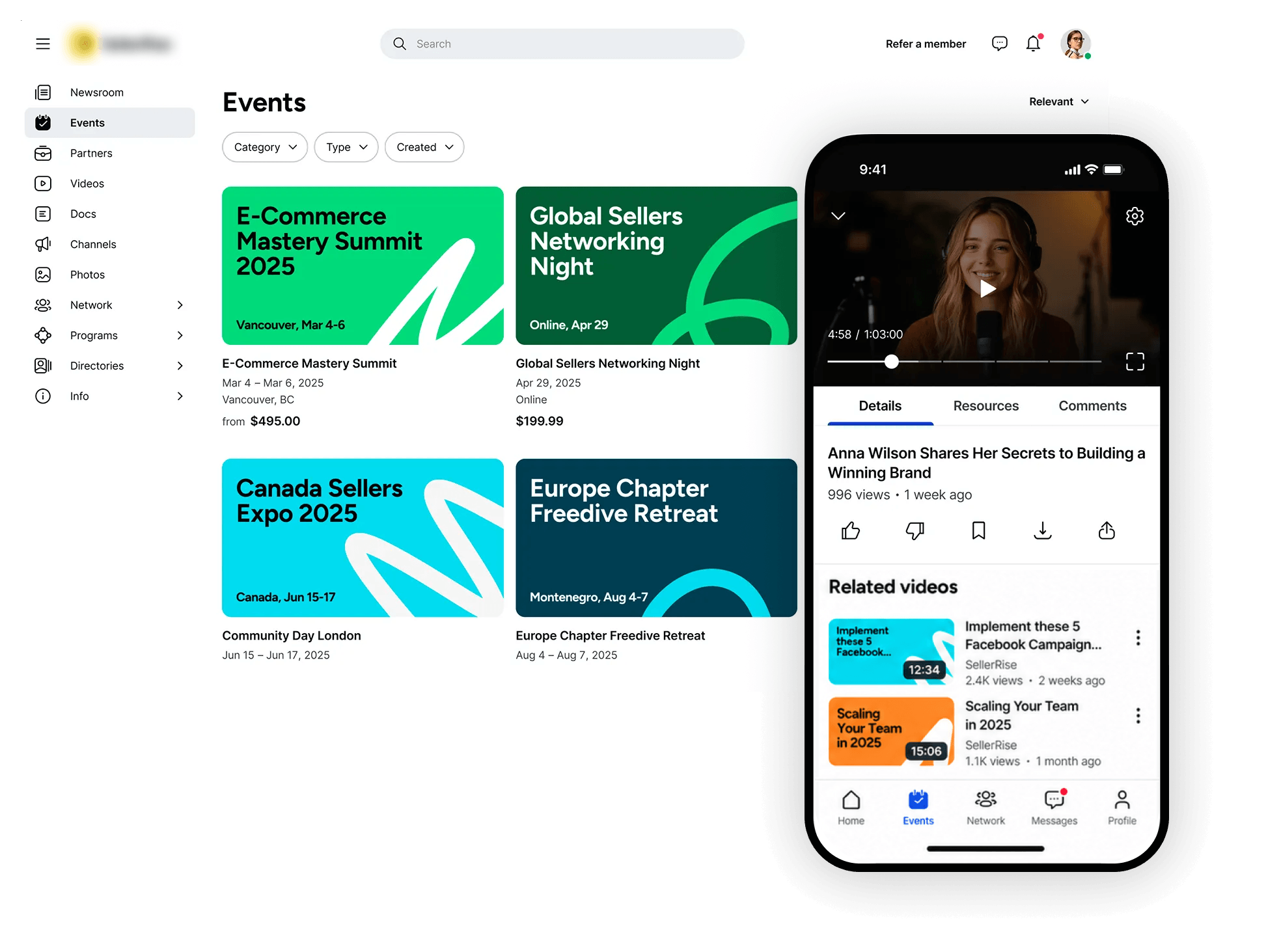
Sponsor and exhibitor tools: partner profiles, offers, reviews, and click-through analytics.
-
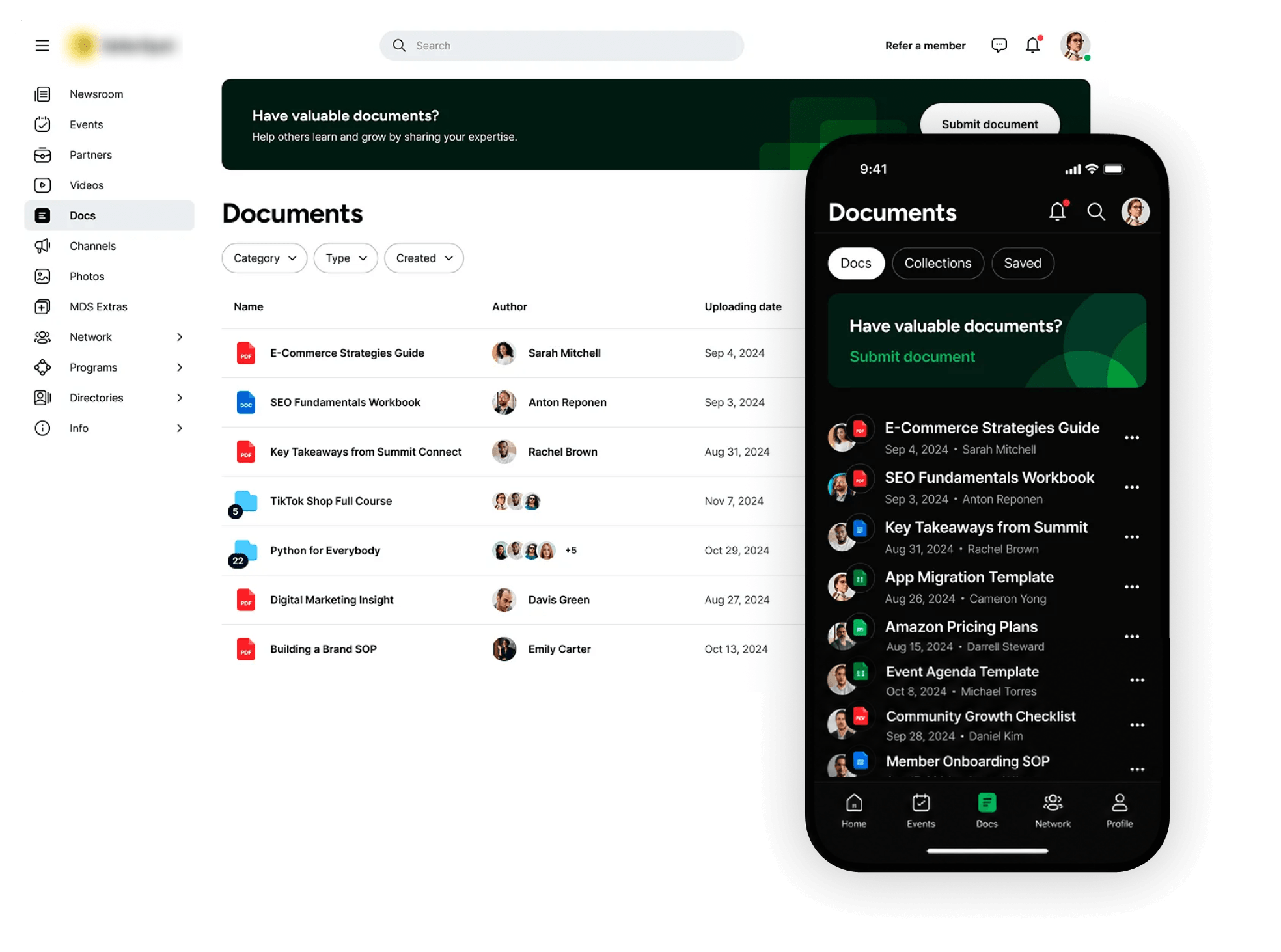
Member directory and map, groups, roles, and granular collaborator permissions.
-
White-label everything: custom domains, branded apps, per-community pages and menus.
-
Open platform: public REST API, webhooks, and MCP access for AI agents.
Key Product Features
-
Event ticketing end-to-end: ticket types, add-ons, orders, invoices, and refunds, all Stripe-powered.
-
Membership engine: tiers, subscriptions, application forms, and approval workflows.
-
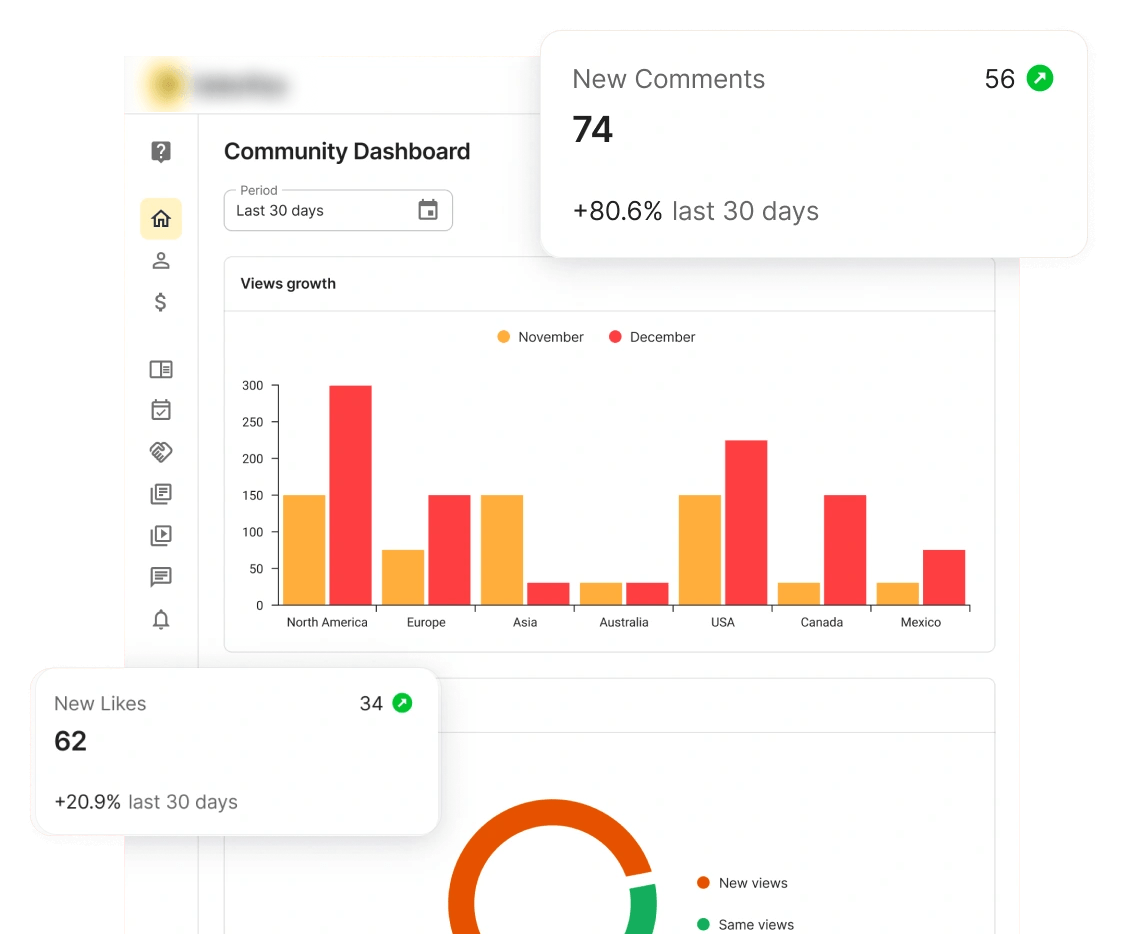
Community layer: channels, posts, comments, announcements, and in-app notifications.
-
On-demand content hub: video library with views, likes, and engagement analytics.
Delivered Results
- 2.5–3× engineering throughput: roadmap items scoped at months of traditional effort now ship in weeks, thanks to the AI-augmented pipeline (one autonomous overnight run produced 11 production-ready, human-reviewed PRs)
- From closed app to platform: a public API + AI/MCP layer opened a brand-new integration and partnership surface, making community data usable by customers’ own tools and AI assistants.
- Enterprise-ready security posture: single identity provider, hardened session model across all services, tenant-isolation audit passed, a stronger story for association and enterprise buyers.
- Minutes-to-root-cause incident response: critical production bugs in payments and data integrity were root-caused, fixed, and regression-locked; recoveries executed with no ongoing data loss.
- Predictable releases: a disciplined multi-environment release train with preprod verification; urgent production hotfixes now turn around same-day.
- Provable quality bar: 95%+ coverage plus mutation-testing gates on all new API code: quality enforced by pipeline, not promises.
FAQ
What does it take to safely open a closed platform's data through a public API?
Opening customer data safely requires an OpenAPI-first, domain-driven API design, strict test coverage and mutation-testing gates on every changed line, and a hardened identity and session model underneath it. Without that foundation, a public API becomes a new attack surface instead of a growth channel.
How do you let AI agents like Claude or ChatGPT connect to a platform's data?
We implement an MCP server exposing the platform's core actions as tools, secured with OAuth 2.1. GroupOS ships 75+ tools this way, letting communities plug AI assistants directly into events, members, and content without exposing raw data access.
How do you prevent AI coding agents from introducing risk into production code?
Autonomous agents run under automated DRY, YAGNI, and security review gates, checked against a code-intelligence graph before any pull request is drafted. Every change still goes through human review — agents never hold the merge button.
How can a multi-tenant SaaS platform scale engineering output without growing headcount?
An AI-augmented delivery pipeline lets a fleet of coding agents plan, build, and verify roadmap items in parallel, while a lean human team focuses on review and architecture. For GroupOS, this lifted engineering throughput 2.5–3x, with one overnight run producing 11 production-ready, human-reviewed pull requests.
Why do platform CTOs partner with Ardas to open their APIs and adopt AI engineering?
Opening a platform and scaling engineering with AI requires more than a chatbot or an API endpoint. Ardas designs the security, observability, and release infrastructure an AI-augmented pipeline actually needs, so throughput gains hold up in production, not just in a pilot.
Get Insights from Real SaaS Builds
Enjoyed the read? We write these case studies and articles to share what works — and what doesn’t — in real SaaS delivery. Got a challenge of your own? Let’s talk tech.

Ryzhokhin