
How to Build an Insider Trading Monitoring Platform for Fintech Compliance
To build a production-grade insider trading monitoring platform for fintech compliance, we designed a real-time surveillance architecture capable of ingesting and correlating high-volume market data, transaction feeds, and internal signals with low latency.
The platform combines event-driven processing, advanced pattern detection, and machine learning–assisted analysis to identify anomalous trading behavior while reducing false positives. Built with immutable audit trails, strict access controls, and regulatory reporting workflows, the solution enables financial institutions, regulators, and law enforcement agencies to enforce market integrity at scale, despite legacy constraints and limited in-house expertise.
Technical stack includes:
-
Legacy: Spring 5, JEE, JSF (Primefaces), HTML, CSS, Apache Torque 10
-
MVP Backend: Quarkus, REST services, Hibernate
-
MVP Frontend: Angular, Tailwind, PrimeNG, NX
-
Databases: Oracle, MS SQL, Sybase
-
Cloud & DevOps: Gotlab, Docker
Initial client's challenges
- Lack of specialists: Shortage of team members with the required expertise
- Outdated tech stack: Limited flexibility and scalability due to reliance on Java and JSF
- Recruitment issues: Inefficient hiring process for the right talent
- Legacy development team: Lack of experience with modern frameworks like Angular and React
- Temporary team augmentation needed: Urgent need for project-based support to overcome bottlenecks
- No trusted external vendors to support the CTO’s goals
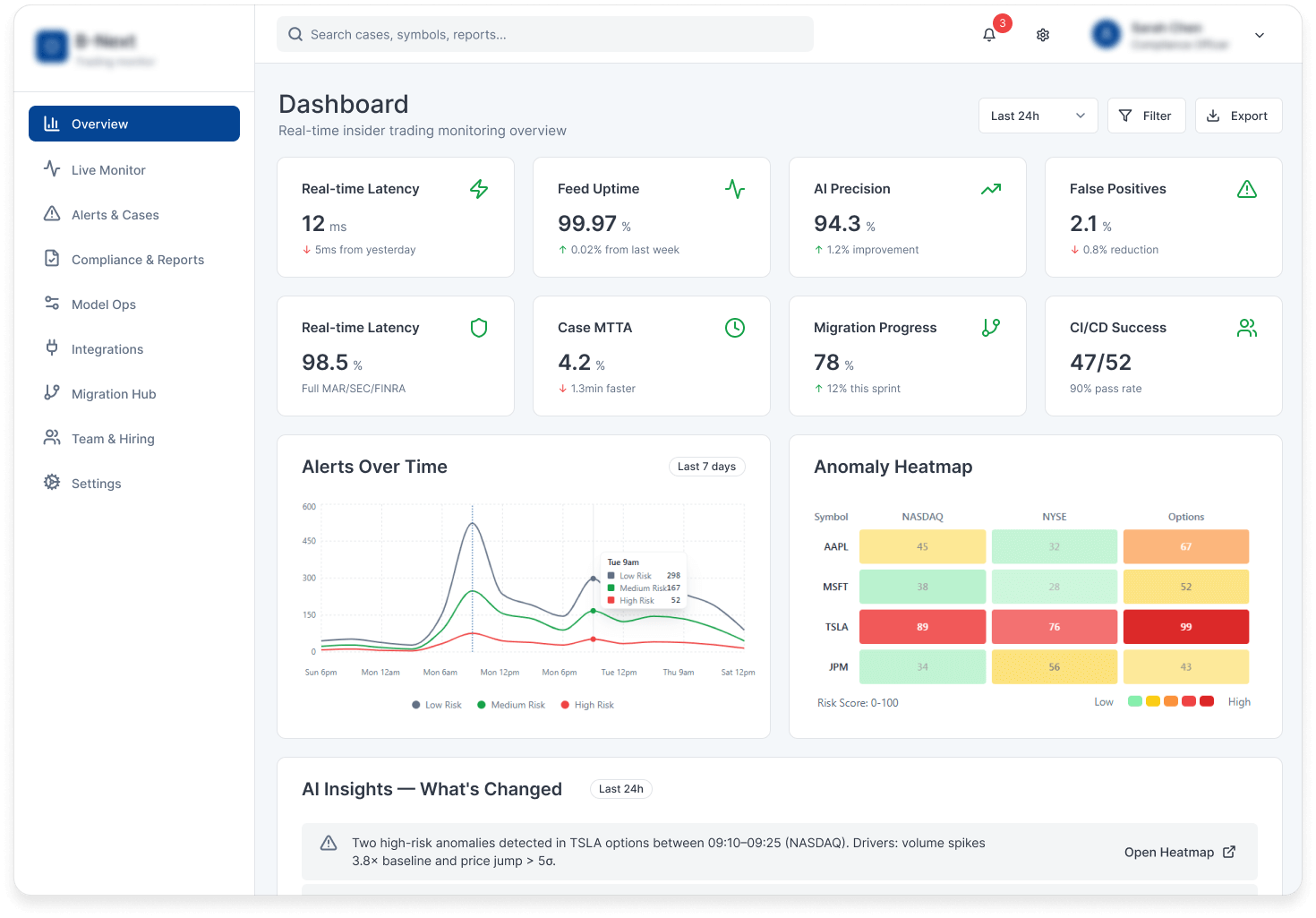
Key features of updated platform
- Real-time trading data analysis to detect potential insider trading activities.
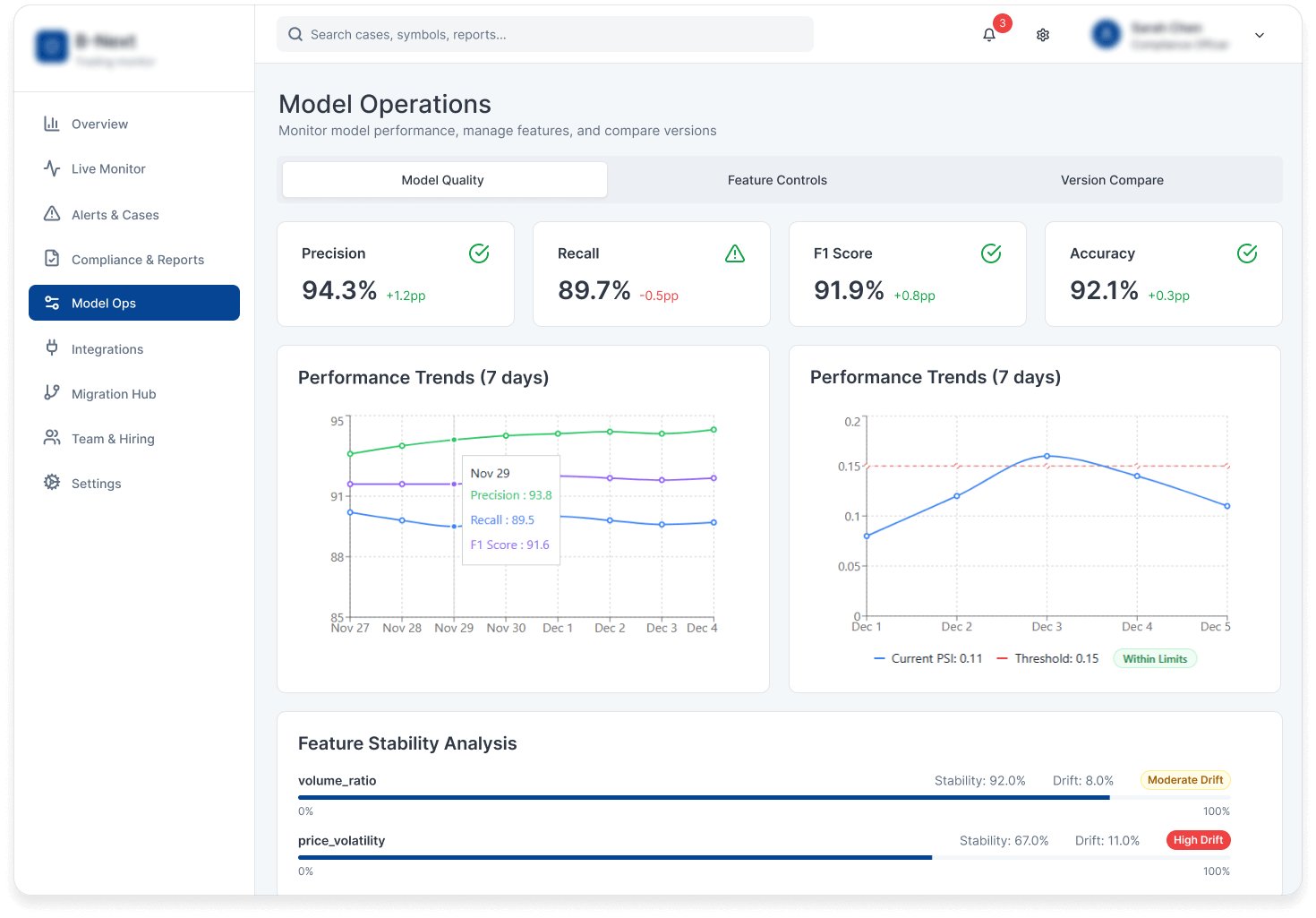
- AI-powered pattern recognition for identifying anomalies in trading behavior.
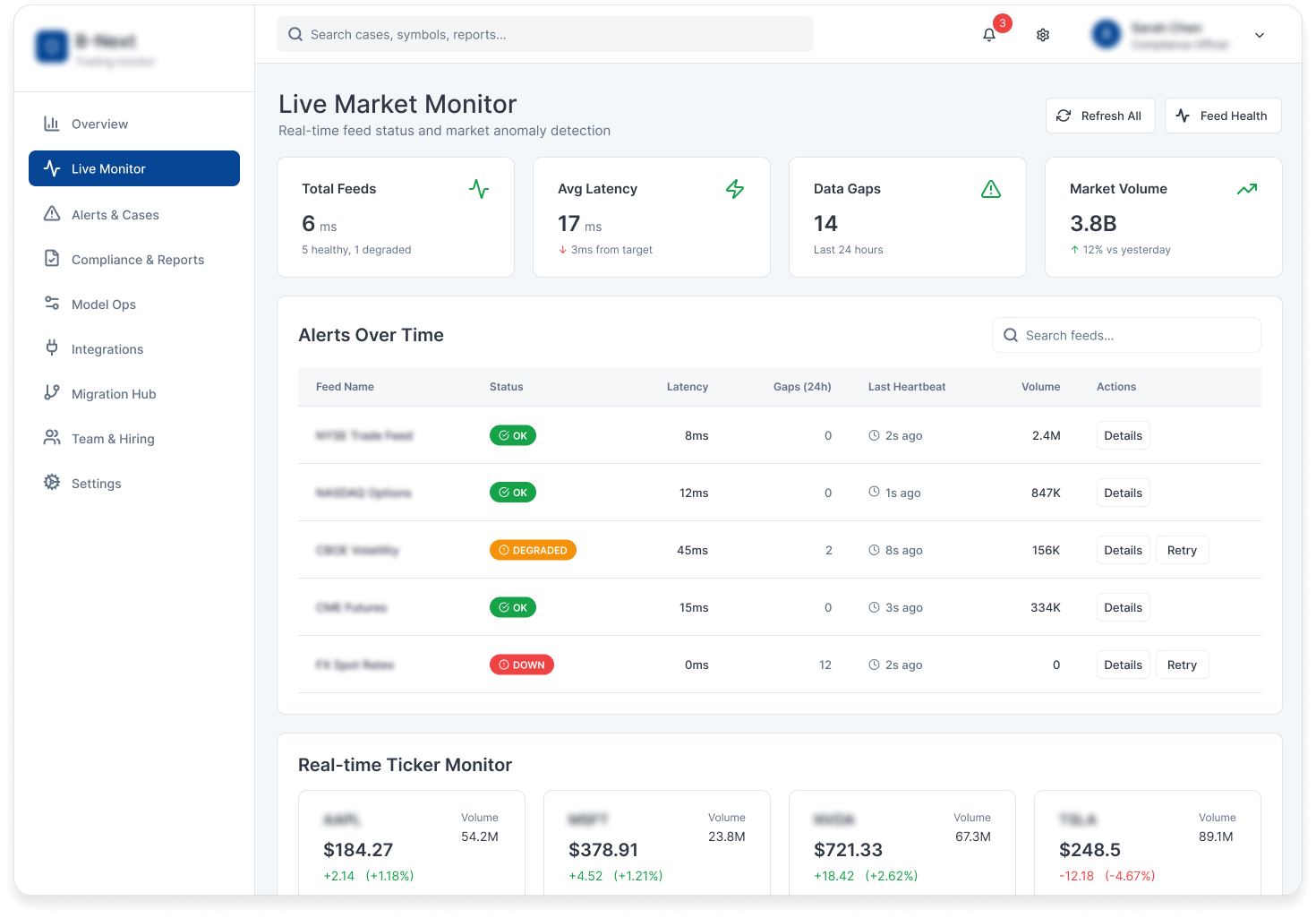
- Seamless integration with market data feeds for real-time alerts.
- Secure and scalable infrastructure with modern technology stack.
- Multi-layered compliance checks to meet regulatory requirements.
- Advanced reporting features to aid in investigations and audits.
- User-friendly dashboard for quick analysis and decision-making.
Solution
- Temporary, project–based team augmentation: Providing experienced developers to fill the gap and support the CTO’s goals for platform development and bug fixing.
- Tech stack modernization: Transitioning from Java/JSF to modern technologies like Angular, React, and Node.js for a more scalable and maintainable solution.
- Optimizing recruitment: Supporting the client’s recruitment process by providing guidance and offering additional expertise to build a stronger team.
- Architectural improvements: Overcoming the tech limitations by redesigning certain elements of the platform to be more adaptable and efficient.
Delivered result
-
Tech stack upgrade: Transitioned to modern technologies (Angular, React) for better functionality and scalability.
-
Faster development: Team augmentation accelerated delivery of key features and bug fixes.
-
Improved recruitment: Supported hiring with insights and helped identify better-fit candidates.
-
Higher reliability: Reduced bottlenecks and improved overall platform stability and performance.
-
Stronger partnership: Built a reliable, long-term collaboration, restoring trust in vendor relations.
FAQ
What architecture is required for real-time insider trading monitoring?
A real-time trading surveillance system needs streaming data ingestion, event processing engines, complex pattern detection, scalable storage, and low-latency alerting pipelines to catch anomalous behavior as it happens.
How do you ensure compliance with financial regulations in trading monitoring platforms?
You implement immutable audit trails, tamper-evident logs, strict role entitlements, compliance workflows, and regulatory reporting capabilities that align with frameworks like MiFID II or SEC requirements.
How do you integrate market data, transaction feeds, and internal signals?
Use data abstraction layers and stream processing (e.g., Kafka, Flink) to normalize diverse feeds, enrich events, and feed alerting engines without manual reconciliation.
How do you reduce false positives in automatic monitoring systems?
Fine-tuned rule engines, machine learning-assisted pattern recognition, and adaptive thresholding backed by historical backtesting can significantly reduce noise while retaining regulatory sensitivity.
Why do fintech CTOs partner with Ardas team?
Ardas engineers develop and support production-grade surveillance platforms with secure data pipelines, model observability, regulatory enforcement layers, and scalable processing — enabling fintech teams to move from pilot detection to reliable enforcement.
Get Insights from Real SaaS Builds
Enjoyed the read? We write these case studies and articles to share what works — and what doesn’t — in real SaaS delivery. Got a challenge of your own? Let’s talk tech.

Ryzhokhin