
How to Architect a High-Load Courier SaaS Platform
To architect a high-load courier SaaS platform, we built a resilient, scalable system trusted by over 7,000 businesses since 2000. The platform processes more than 170,000 loads per month, manages over 50,000 active vehicles, and supports contracts exceeding £190M annually. Designed to handle end-to-end logistics workflows — from load posting to final delivery — it enables transportation companies and individual operators to manage complex operations efficiently at scale.
The technical stack includes:
- Backend: Java, Spring Boot, Hibernate, Web Sockets, Microservices, PostgreSQL, Cassandra, Redis, Debezium, Liquibase, Kafka
- Frontend: JavaScript, TypeScript, ReactJS, Redux Saga, React Hooks, Material UI, Formik, Microfrontends, Webpack, Ramda, Moment
- DevOps / Infrastructure: AWS ECS, Docker, Kubernetes, Jenkins, Terraform, Zabbix, New Relic
- Testing & QA: JUnit, Cypress, Jest, Enzyme, Serenity, Thucydides
The story
This courier SaaS product was created in the early 2000s and after successfully passing the post-MVP phase and getting good traction, they had to grow an IT department which was difficult and expensive in the UK. We met them at the beginning of active growth, all their software required refactoring and modernization. We developed a transformation plan and ran a small pilot project to show how we could help and solve their problems. That was the beginning of long and profitable cooperation.
The big push
The biggest challenge was made in 2007-2008 when the first team of 4 developers, 1 QA, and 1 business analyst had to refactor the system and make it ready for much higher performance, increase stability, and simultaneously guarantee 99% uptime to satisfy existing users. By the end of 2008, we doubled the team and brought all professional technics into the development process covering all aspects and levels of this SaaS platform such as CI/CD, automated testing, scrum, etc. That was a big push and a turning point in the life cycle of this system.
The offshore team
We started with a dedicated team of 6 IT engineers in 2007 and today it is a large IT department that consists of 34 engineers including front and back ends development, database, and big data engineering, data science, server infrastructure management, QA, task management, and business analysis. The whole team works closely with a core business team in the UK showing an example of the effective and long-term collaboration between business and offshore development teams.
Long-lasting relations
Today we are proud to be a part of the highly technical and very successful SaaS solution. Building long-lasting relations is never easy, we have been accurate with all the details through the years. Even today, we are striving to improve our integration into the business by optimizing our costs and processes. And yes, we would be glad to share our expertise in setting up long-lasting relations for any other SaaS tool about to take over the world.
Tracking & navigation
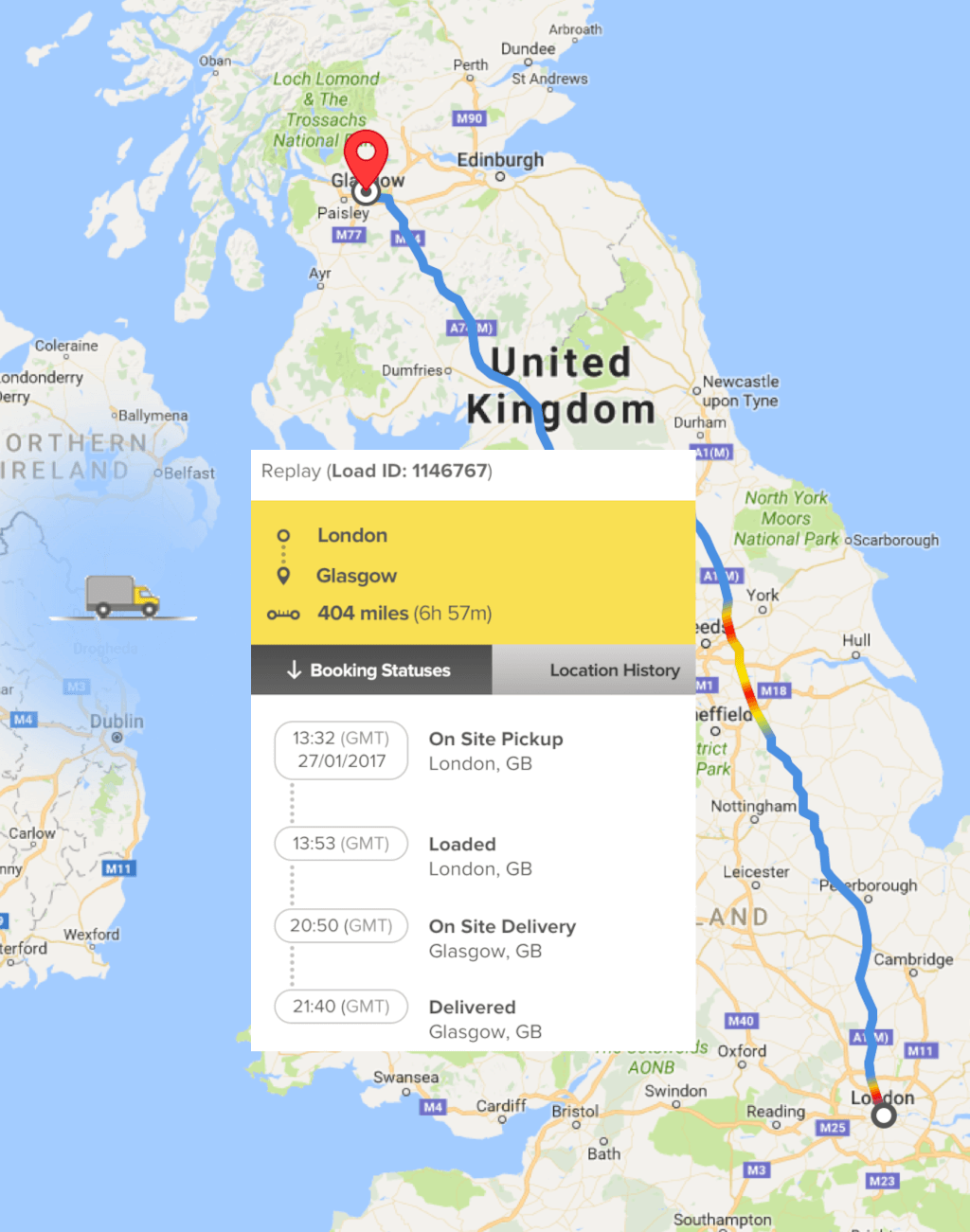
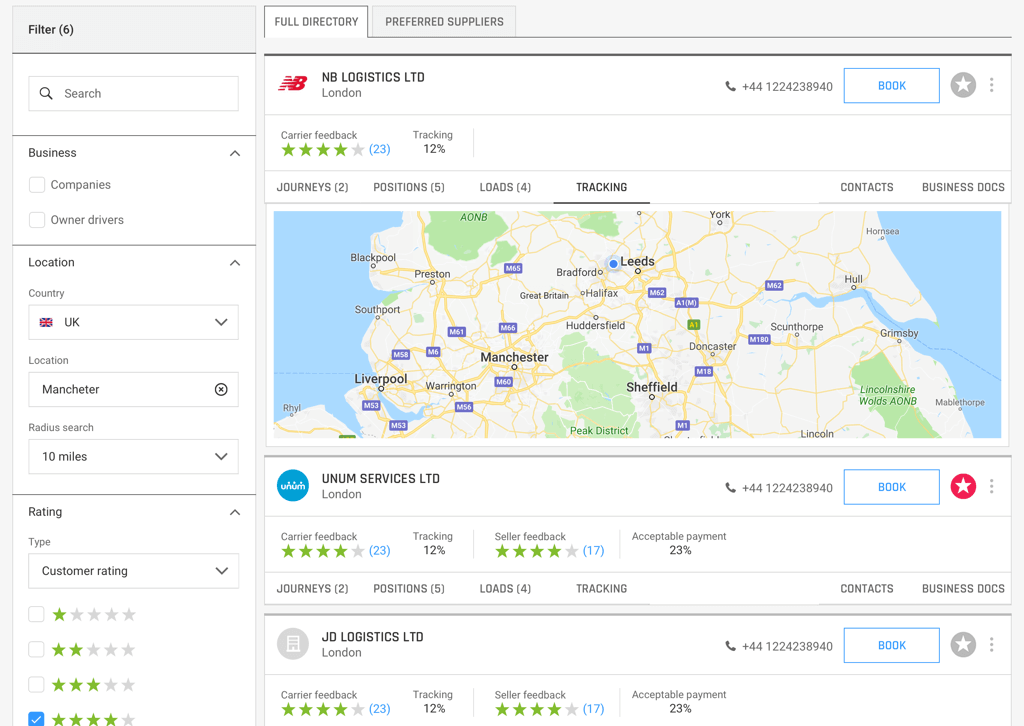
The whole set of fleet and load-tracking features were implemented for couriers and customers. The platform tracks all vehicles and loads and visualizes them on the map using 15+ TMS providers or GPS in smartphones.
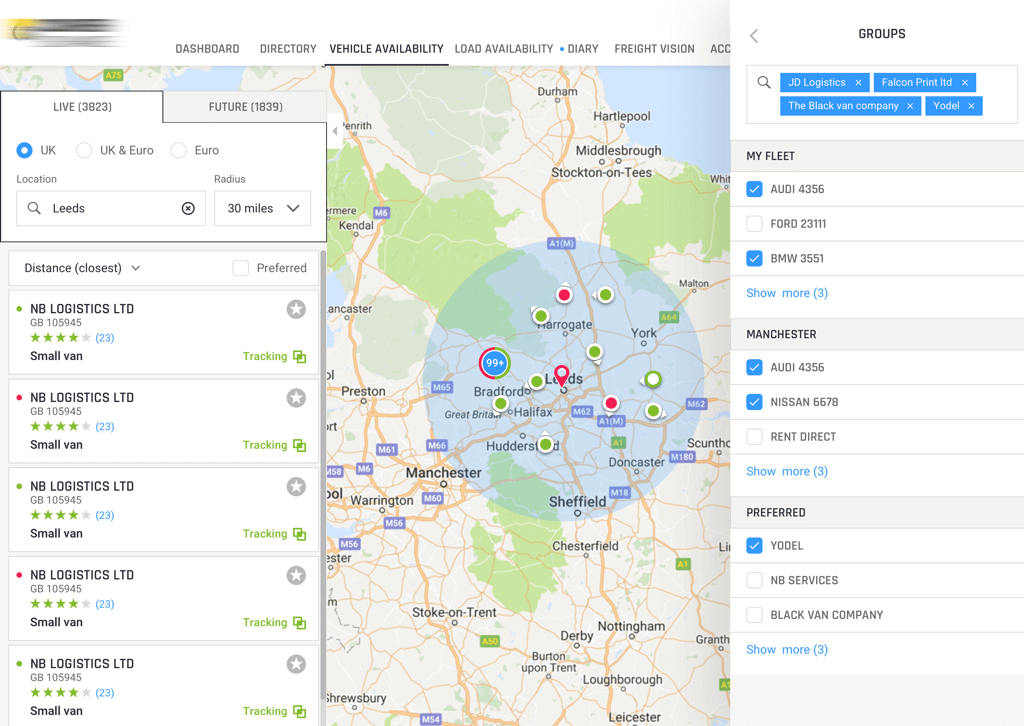
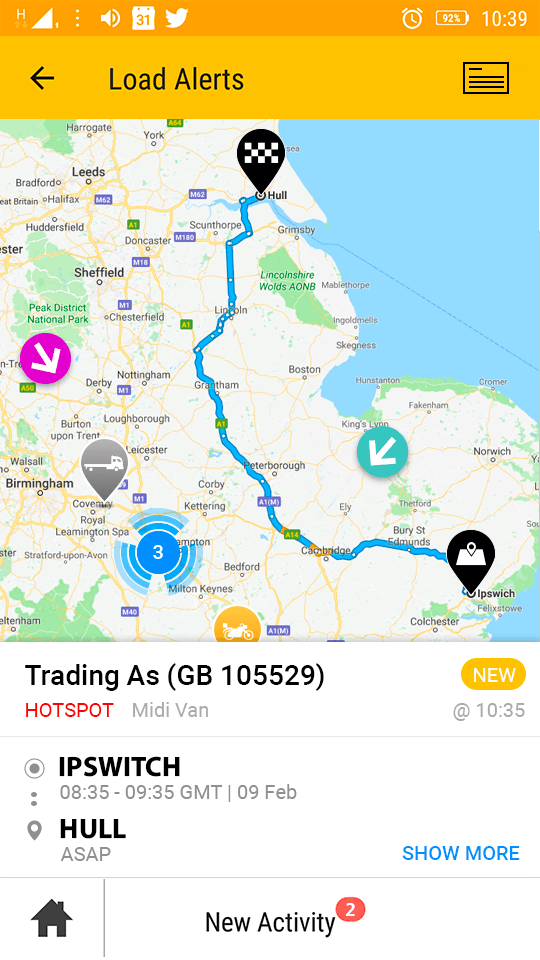
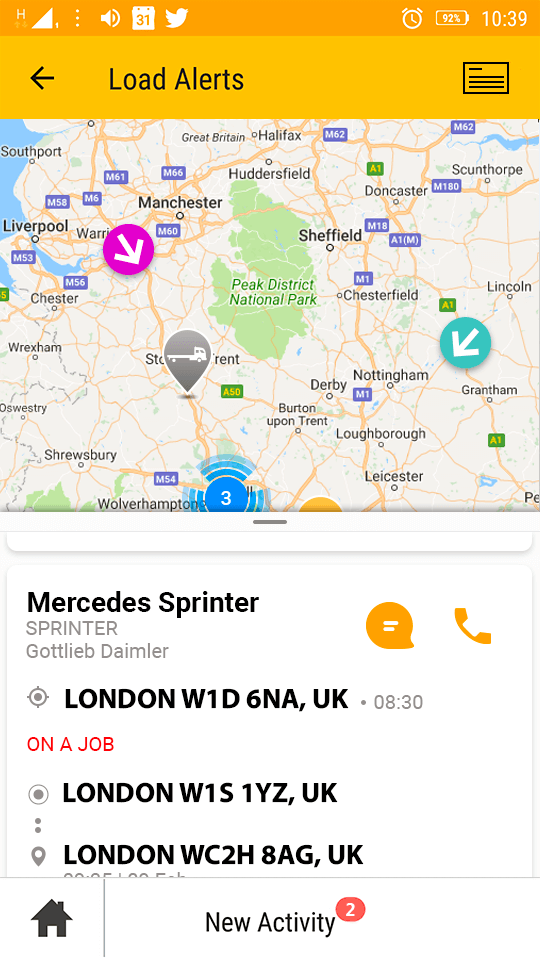
The map shows current loads with destinations and available transport with movement directions.
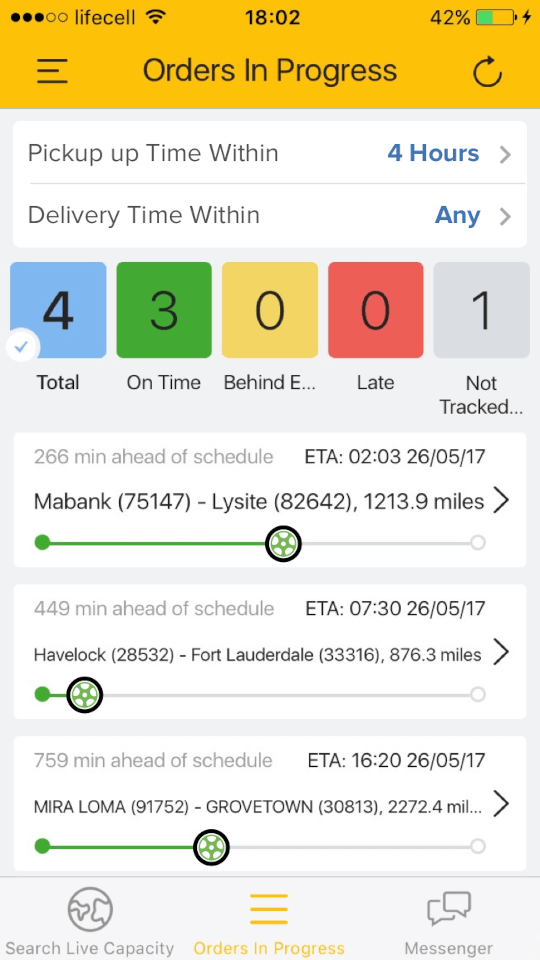
Delivery ETAs, delays, fleet and load statuses, route history are displayed and updated on the fly.
All map visualization and geocoding were initially done with Google Maps and now changed to Here WeGo.
Courier & driver layer
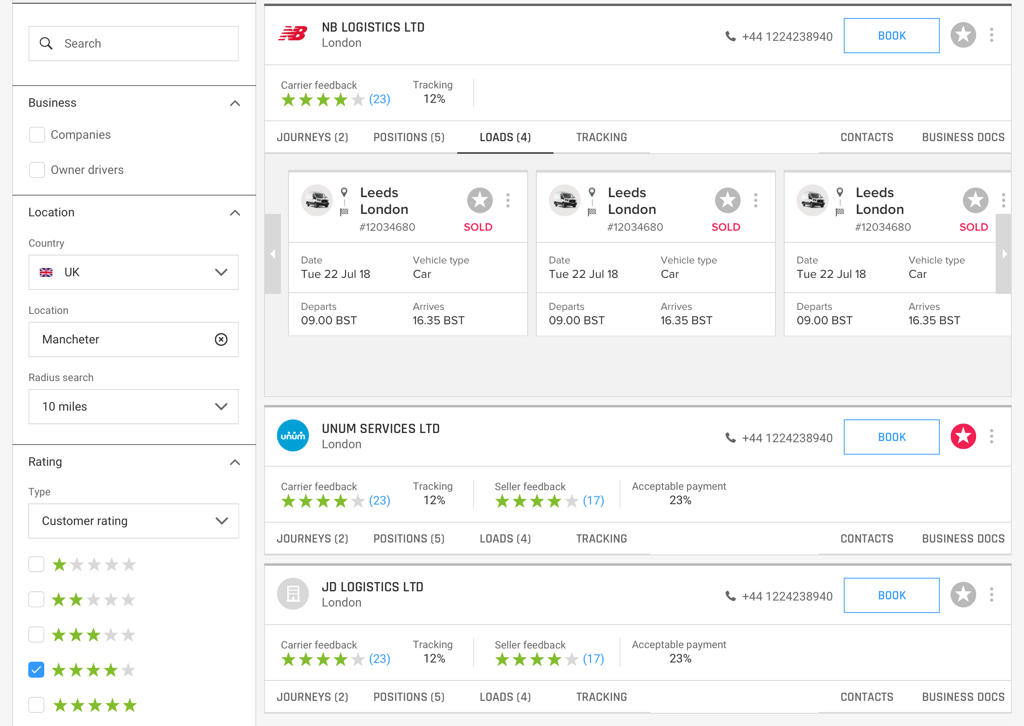
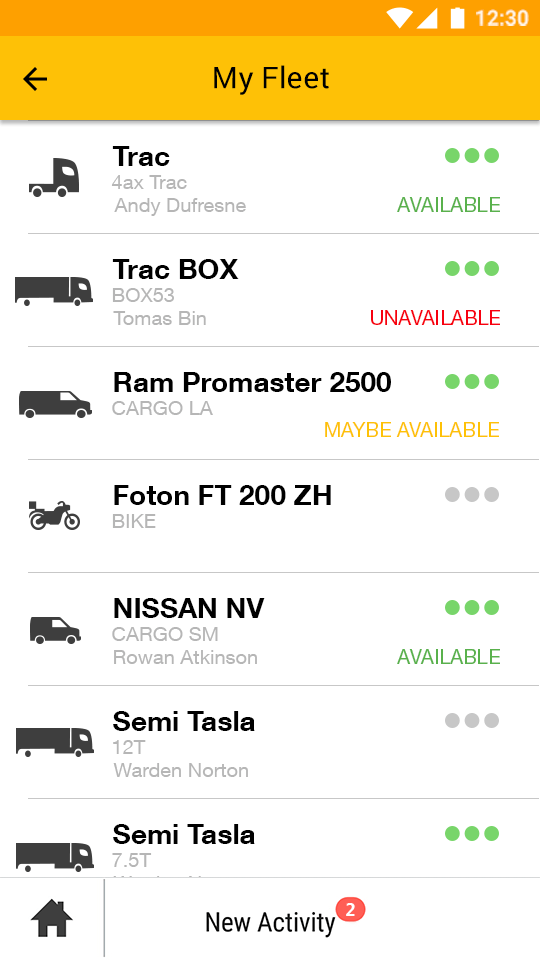
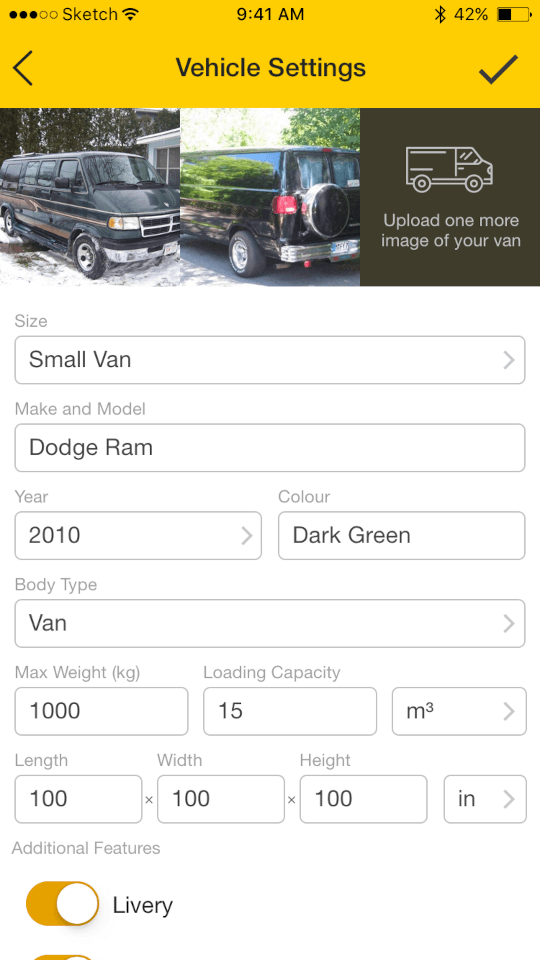
Courier companies can add their drivers and vehicles. A simplified UI was done for individual drivers with only one car. The courier manager can post jobs to subcontract a driver.
Fleet real-time management is done with a web or mobile app and telematics integration systems.
Couriers can filter loads by many parameters such as vehicle type, region/area, etc., expose their availability, look for the closest loads, apply for a job by sending a quote, communicate with customers using an external communication tool.
Customer perspective
Customer UI gives the possibility to post jobs (loads) describing them, get an immediate notification when a courier applies for a job, review all applicants and approve or reject the suggested quote.
The real-time load management and vehicle routes are implemented and visualized on the map to see where your load is going and what the status is.
When a job is completed a customer can rate and leave feedback for a driver.
Performance & scalability
The back-end we built is capable of handling and process:
- 5,000 members in the EU who brought over 50,000 vehicles
- 230,000 loads per month
- Tons of real-time tracking requests from all fleets we have in the system
- Hundreds of thousands of internal messages, emails, and SMS alerts sent between customers and companies
- 7 white label partners working simultaneously
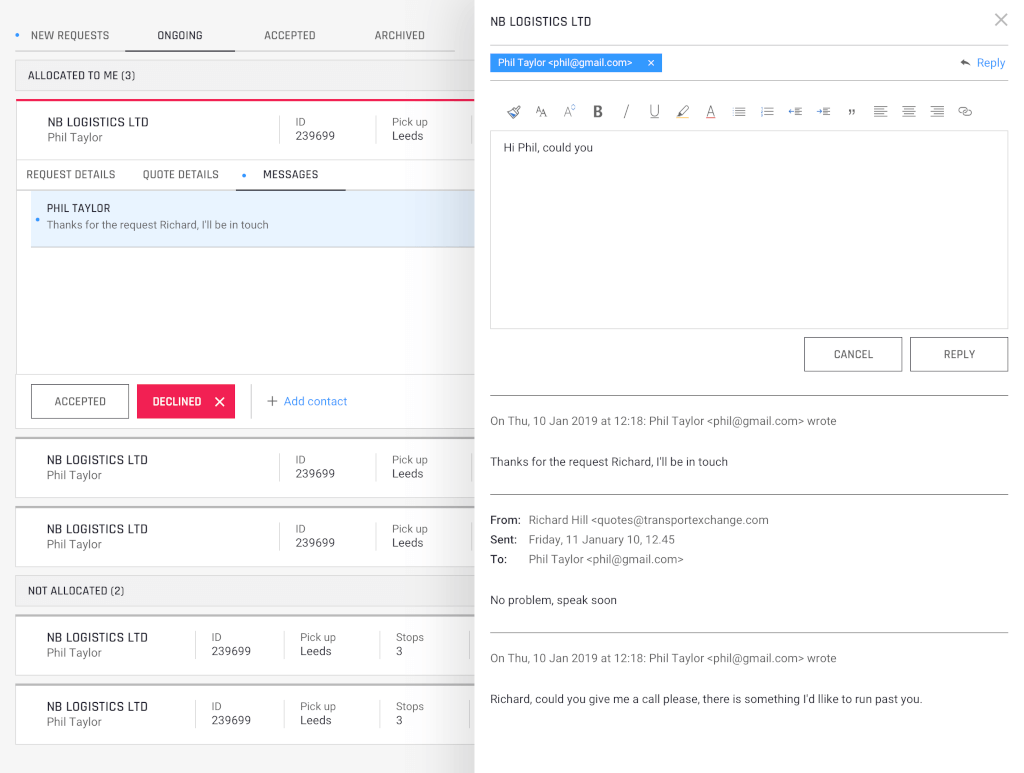
White label & customer service
We built the white label layer that allows other companies to resell this platform under their brand. Allowing them to customize branding, logic, and behavior. Our big data back-end easily handles data coming from all partners.
We integrated with Zendesk for customer support, SendGrid to send emails, and CardBoardFish to send SMS to notify users.
Customer management, chats, and other support features are available for parent company and white-label firms.
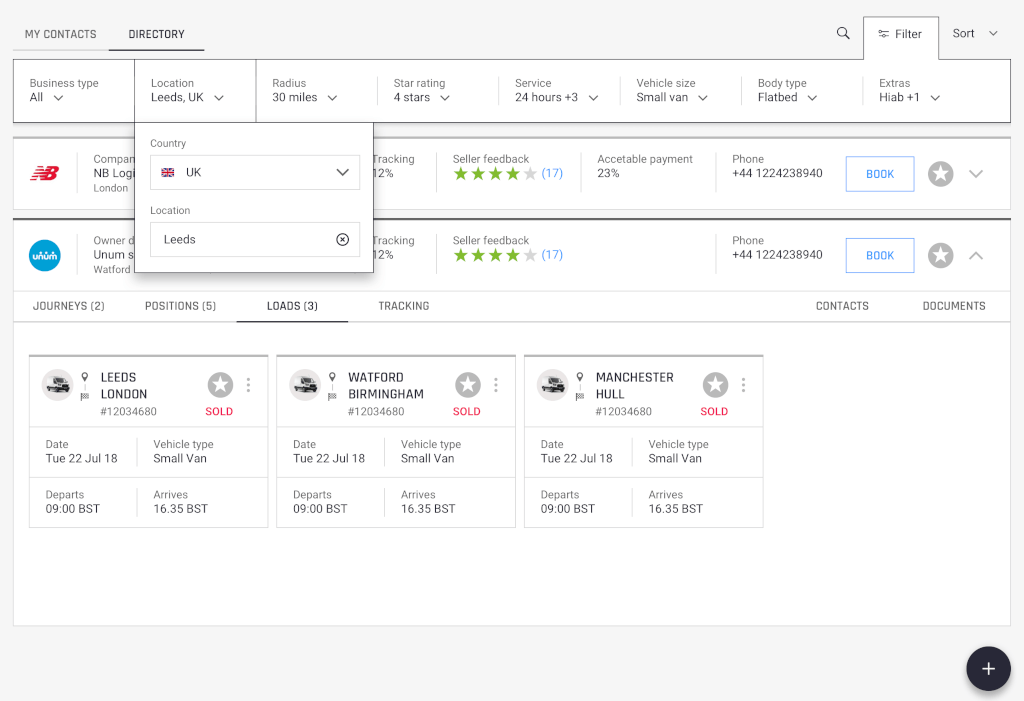
Administration
The administration panel was developed as a separate web application to manage all system aspects of this SaaS. It allows controlling courier companies and customers, loads, payments, and all other data flow.
It flexibly configures the system-level behavior and helps SaaS staff to resolve issues on a company/user level providing high-end support services.
All external APIs are configured here allowing us to connect this platform to many ERP/CRMs or other logistics software used in the industry today.
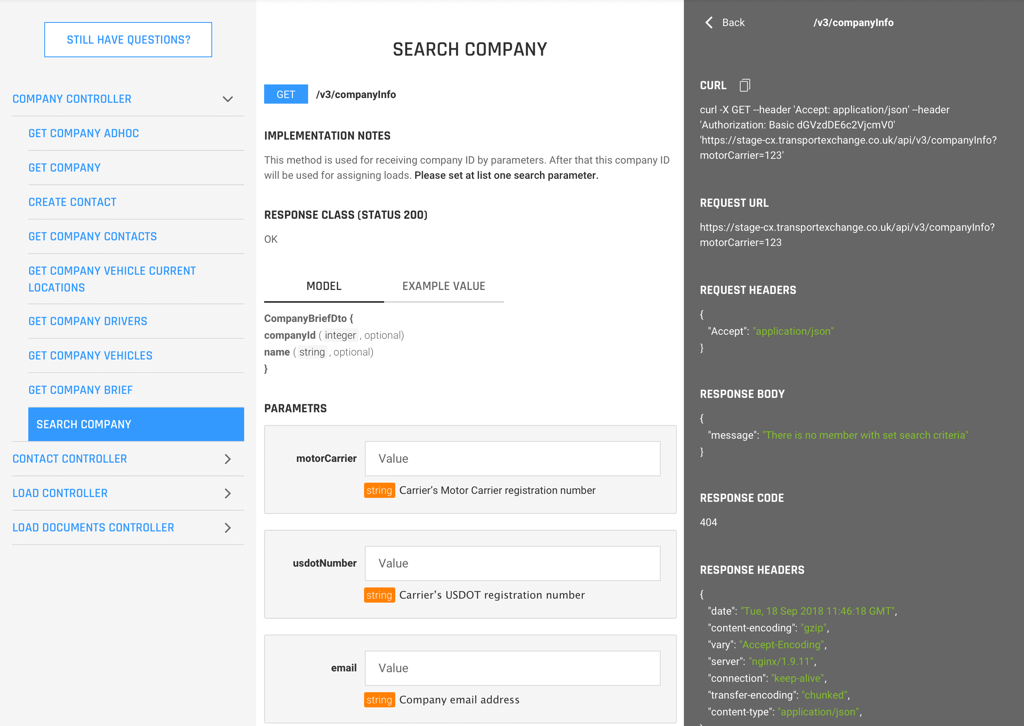
UI/UX design
More than 200 screens, forms, popups, pages are our responsibility. Our designers have been working on all the tiny details to ensure that the application precisely meets the customers' requirements and their daily duties.
Since 2012 when we took over the original design, we have constantly been improving the ergonomics of UI making the user experience better and more optimized for the audience.
All the requirements of customers and our product owners are analyzed carefully and implemented precisely.
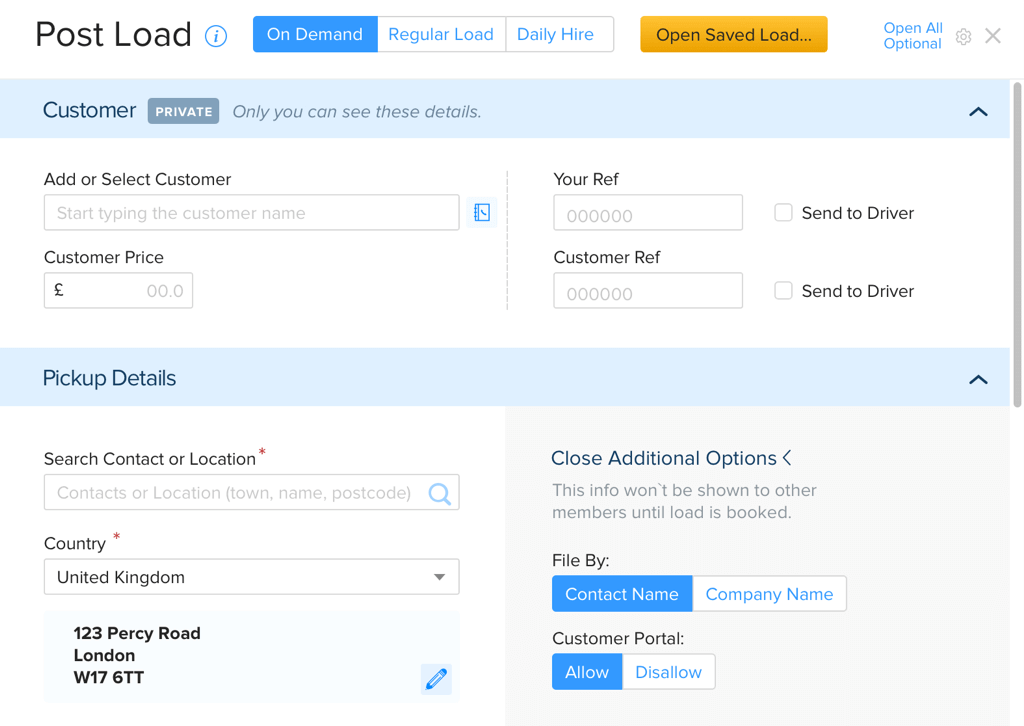
A mobile logistics application
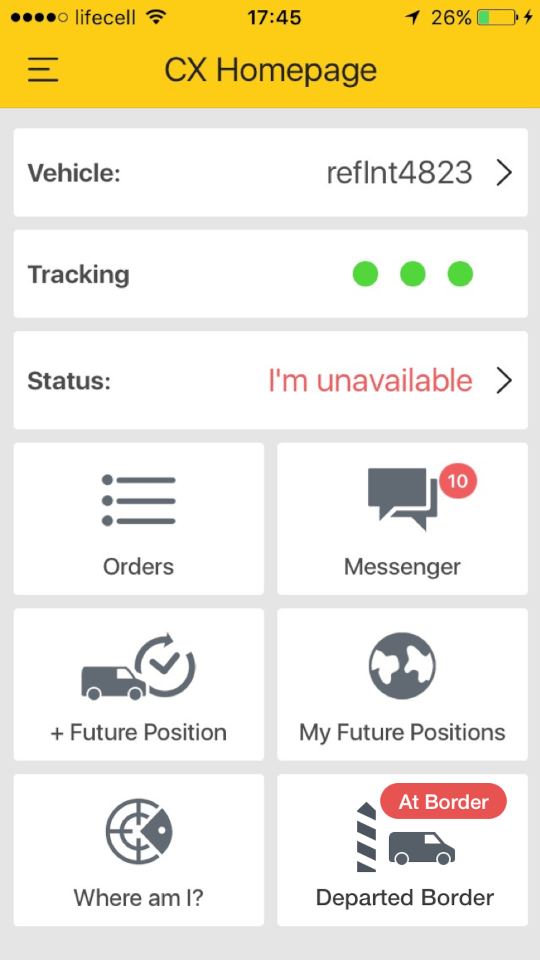
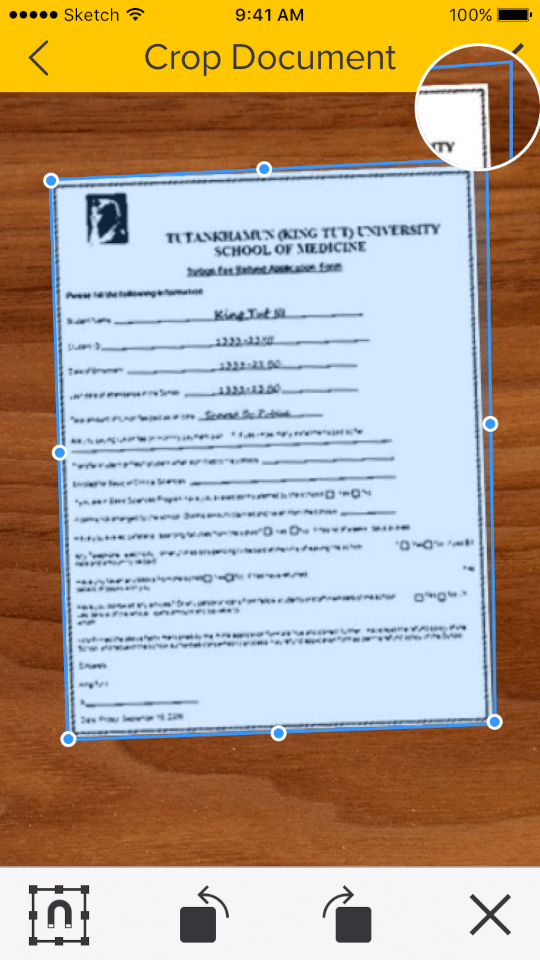
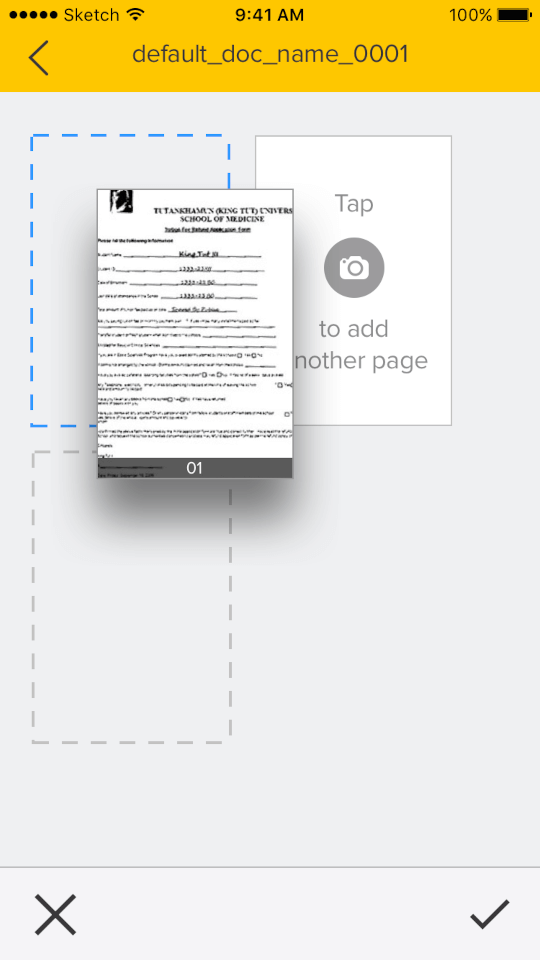
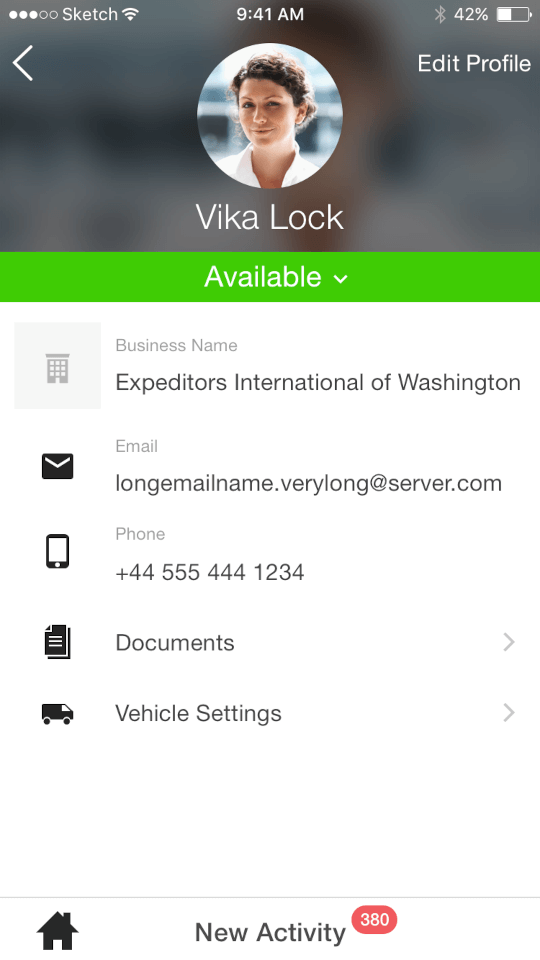
The main driver app including its regional versions allows users to receive tasks, track their progress, send messages, etc. It is available on iOS and Android, originally developed natively and now it is been redeveloped on Flutter.
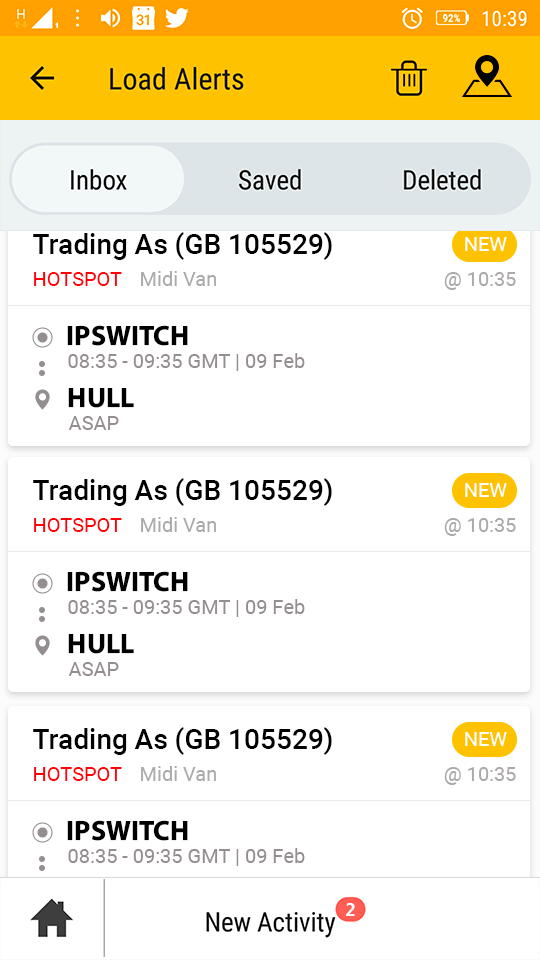
The application for the SaaS allows managing the loads from managers' and dispatchers' points of view. It also includes a live availability map showing real-time fleet capacity and an instant messenger with specific B2B features.
Customer feedback
Ardas was tasked with the re-development of our mature SaaS application. They initially helped us with our new hosting architecture before working with us to re-design and develop all elements of the application.
It was 2008, and our logistics platform was beginning to grow at that moment. The business was becoming self-sufficient, but the old architecture was no longer suitable. It did not cope either in terms of performance or scalability. It required rapid development. After reviewing the system, Ardas suggested refactoring, which they planned so that the system continued to work. It was essential for us not to stop the business, and of course, this strategy was approved.
Since then, they continue to work on our ever-growing list of requirements. The team at Ardas is highly skilled; they have an in-depth knowledge of existing technologies and programming languages. In addition, they continue to explore new options, and as a result, we have a robust, resilient, fast, and scalable enterprise-level application.
In my personal experience, this was the longest relationship with a development company that I have known. Rarely does one come across an outsourcing company with which it is possible to work without problems and interruptions for more than 2-3 years.
We have been cooperating with Ardas for 11 years, and now I no longer work in the company, but it still works with Ardas.
Today's development team consists of 30+ people of all IT professions needed for the full development and Saas product improvement.
From the first day of cooperation, we worked according to the dedicated team scheme because we had a lot of work and the product was developing very dynamically. Throughout the entire time, Ardas adequately solves all staffing problems, completely removing these problems from us.
FAQ
What architecture is required to build a scalable freight management platform?
A scalable freight management platform requires a cloud-native, microservices-based architecture with event-driven processing, real-time tracking services, and API layers for carrier, GPS, and partner integrations. High-load routing and optimization engines are used to process large volumes of loads, vehicles, and contracts without performance degradation.
How do you integrate GPS tracking and real-time logistics data at scale?
Real-time logistics platforms integrate GPS and IoT data through streaming ingestion pipelines using persistent connections such as WebSockets or MQTT. Events are normalized, enriched, and processed in near real time to support live tracking, ETA updates, and operational alerts across thousands of vehicles.
How can freight management platforms reduce delivery delays and optimize routing?
Delivery delays are reduced by combining dynamic route optimization, predictive ETA models, and congestion forecasting powered by historical and live traffic data. These systems continuously recalculate routes as conditions change, improving on-time delivery rates and fleet utilization.
How do you ensure reliability and data consistency in high-load logistics systems?
Reliability is achieved through idempotent event processing, distributed transaction patterns, automated retries, circuit breakers, and full observability across services. This ensures consistent load states, accurate tracking, and system stability even during traffic spikes or partial failures.
Why do logistics technology leaders choose Ardas to build freight management platforms?
Logistics leaders choose Ardas to design and implement production-grade freight management systems with proven scalability, real-time data pipelines, and robust integration layers. Our platforms help logistics teams handle high transaction volumes, reduce operational friction, and improve delivery performance as their networks grow.
Get Insights from Real SaaS Builds
Enjoyed the read? We write these case studies and articles to share what works — and what doesn’t — in real SaaS delivery. Got a challenge of your own? Let’s talk tech.

Ryzhokhin