
SaaS 2026 Trends: From AI Experiments to Production-Ready Platforms


Image: Andrew Ryzhokhin at SaaStr AI 2025 with Jason M. Lemkin
Key Insights
-
AI shifts from experimentation to strategic foundation — Budgets prioritize AI readiness, reliability, and integration over feature-level demos.
-
Infrastructure beats feature velocity — Durable, modular platforms outperform rapid feature shipping; architectural inertia becomes a competitive liability.
-
Workflow orchestration becomes mandatory — Reliable AI at scale requires control planes and execution layers, not isolated features.
-
Organization design moves data-first — Data platforms, integration, and ownership models matter more than traditional feature squads.
-
Vertical SaaS deepens domain advantage — Industry-specific AI workflows deliver measurable outcomes, not generic capabilities.
-
Data becomes both infrastructure and product — Clean, versioned, and governed data underpins AI performance and monetization.
-
Security and governance turn into go-to-market differentiators — Transparency, auditability, and compliance increasingly shape buying decisions.
-
Multimodal interfaces reshape SaaS usage — Voice, vision, and contextual input expand how users interact with operational systems.
Let’s start with a summary: if the 2024–2025 period was about experimenting with and adding AI to businesses, 2026 will be about surviving it operationally, financially, and organizationally.
Across SaaStr, SaaStr.ai, and enterprise-focused AI summits, one message was consistent: AI is no longer a feature roadmap item for businesses. It is a forcing function that reshapes architecture, cost structures, go-to-market strategy, and internal teams. In this article, “production-ready AI” means AI systems that are observable, governable, cost-controlled, and able to operate continuously under real user load.
The winners in 2026 won’t be the companies shipping the flashiest AI demos. They’ll be the ones quietly rebuilding foundations so AI can scale, stay reliable, and generate revenue without blowing up margins or trust.
We have prepared an insightful piece together with Ardas developers, business analysts, and C-level executives to highlight the most important SaaS trends for 2026, grounded in real production work, SaaStr insights, and what enterprise buyers are already demanding.
How SaaS Trends Are Shifting from 2025 → 2026
First, we decided to add a brief recap here.
For most B2B companies, SaaS 2025 trends were mostly focused on the following:
- AI integration into ERP/CRM/HR
- Cloud-first and API-first architectures
- Vertical SaaS
- Low-code and PaaS momentum
- Security and compliance
All of these still matter. But in 2026, the emphasis shifts from capability to operability, durability, and cost control.
So, the dominant question CTOs and development teams are asking right now is:
Can our systems handle AI at scale — repeatedly, securely, and profitably?
SaaS 2026 Trend #1: AI Readiness Becomes a Budget Line Item
What’s new:
Most corporate budgets are moving away from experimentation and toward AI readiness and survivability.
Here is an insider insight from this year's SaaStr conference conversations: Founders and CTOs are no longer asking “What AI features should we add?”
They’re asking:
- Is our data usable?
- Are our systems observable?
- Can we support AI workloads reliably?
What this means in practice for your business
- Legacy systems are being modernized before AI ships
- Data pipelines, eventing, and integration layers are getting funded first
- AI features are gated by infrastructure maturity
2026 takeaway:
AI readiness replaces “innovation labs” as a core budget category. In 2026, AI is no longer treated as an experimental capability or isolated initiative. Leading SaaS companies position AI as a strategic foundation, budgeting for data readiness, orchestration layers, and operational reliability before investing in new features. The competitive gap increasingly depends on whether AI can operate predictably in production — not on how impressive demos appear.
SaaS 2026 Trend #2: Infrastructure Rebuilds (Quietly) Replace Feature Velocity
At SaaStr.ai, a recurring theme was clear: The fastest-moving companies are often shipping fewer features because they’re rebuilding the core.
Key signals here:
- Monolith-to-modular refactors
- API normalization
- Event-driven architectures
- Heavy investment in observability, retries, and fault tolerance
Why this matters for your business
AI workloads amplify system weaknesses.
2026 SaaS reality
Infrastructure is no longer “invisible work.” It is a competitive advantage and a long-term survival requirement.
Speed of feature delivery is no longer the primary advantage. Durable, modular infrastructure now determines whether SaaS platforms can scale AI without accumulating operational risk. Internal architecture: data pipelines, execution layers, and system boundaries, becomes a competitive factor, while architectural inertia increasingly limits growth.
SaaS 2026 Trend #3: Workflow Orchestration Becomes the AI Control Plane
One of the clearest patterns from field conferences was: AI without orchestration does not scale. As AI systems grow more complex, workflow orchestration becomes mandatory.
Scaling AI reliably requires control planes that manage execution, retries, cost controls, observability, and governance. Standalone AI features fail under load when they lack orchestration layers designed for continuous operation. Without orchestration, teams see cascading failures: retries amplify costs, context is lost between steps, and errors become untraceable in production.
Tools like n8n are being used not just for automation, but as:
- Bridges between MVP experiments and enterprise systems
- Interfaces between technical and non-technical teams
- Control layers for AI execution, retries, routing, and observability
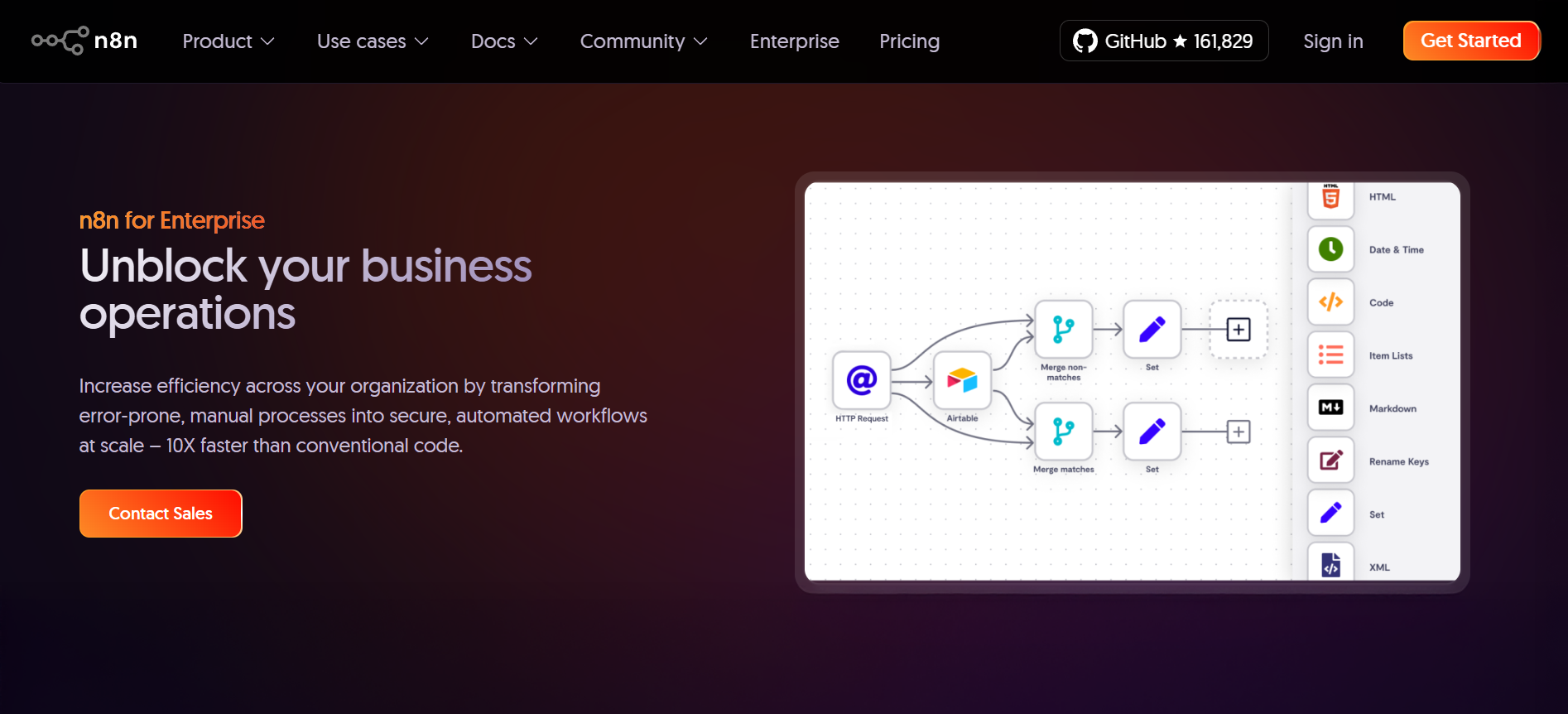
In 2025 Ardas team joined the n8n Expert Partnership Programme to deliver and expand flexible AI automation capabilities for its customers. Read more about this partnership here.
Why orchestration wins in 2026:
- AI models change fast
- Business logic does not
- Orchestration decouples the two
2026 trend
Workflow engines evolve into AI execution and governance layers — not just automation tools.
SaaS 2026 Trend #4: Teams Reorganize Around Data, Not Features
One more insight from SaaStr enterprise sessions: AI is reshaping org charts faster than product roadmaps.
What’s changing:
- Dedicated AI pods
- Data platform teams become first-class citizens
- MLOps and integration engineers move closer to product teams
Old model
Feature teams with “AI tasks.”
New model for 2026
Platform teams that make AI usable everywhere — safely and repeatedly. This shift reduces duplicated AI work, clarifies ownership, and prevents production incidents caused by unclear responsibility boundaries.
2026 takeaway
Org design becomes a scaling constraint or a force multiplier. SaaS organizations are restructuring around data and execution ownership rather than feature delivery. Data platforms, integration roles, and AI operations gain prominence over traditional feature squads. This shift reflects a reality: AI performance depends more on data quality and operational discipline than on model innovation alone.
SaaS 2026 Trend #5: Vertical SaaS + AI Goes Deep, Not Broad
Just like in 2025, Vertical SaaS remains strong, but the approach is changing.
Instead of Generic AI copilots
We’re seeing:
- Industry-specific scoring models
- Embedded decision logic
- Domain-trained workflows
Some real-world examples discussed at conferences:
- AI in legal, logistics, healthcare, sports, and fintech
- Vision AI, document intelligence, and predictive workflows are embedded directly into core processes
A good example of this shift is how Vision AI is being applied in sports tech. In one of our recent projects, we helped turn raw video footage into a production-ready, domain-specific AI system that evaluates player technique, applies sport-specific scoring logic, and delivers actionable feedback.
The focus wasn’t on “AI insights” for their own sake, but on measurable outcomes: fewer unforced errors, personalized training drills, and scalable feedback loops for both players and coaches.
This is what vertical AI looks like in practice — tightly embedded into the core workflow, trained on domain realities, and built to drive real performance improvement.
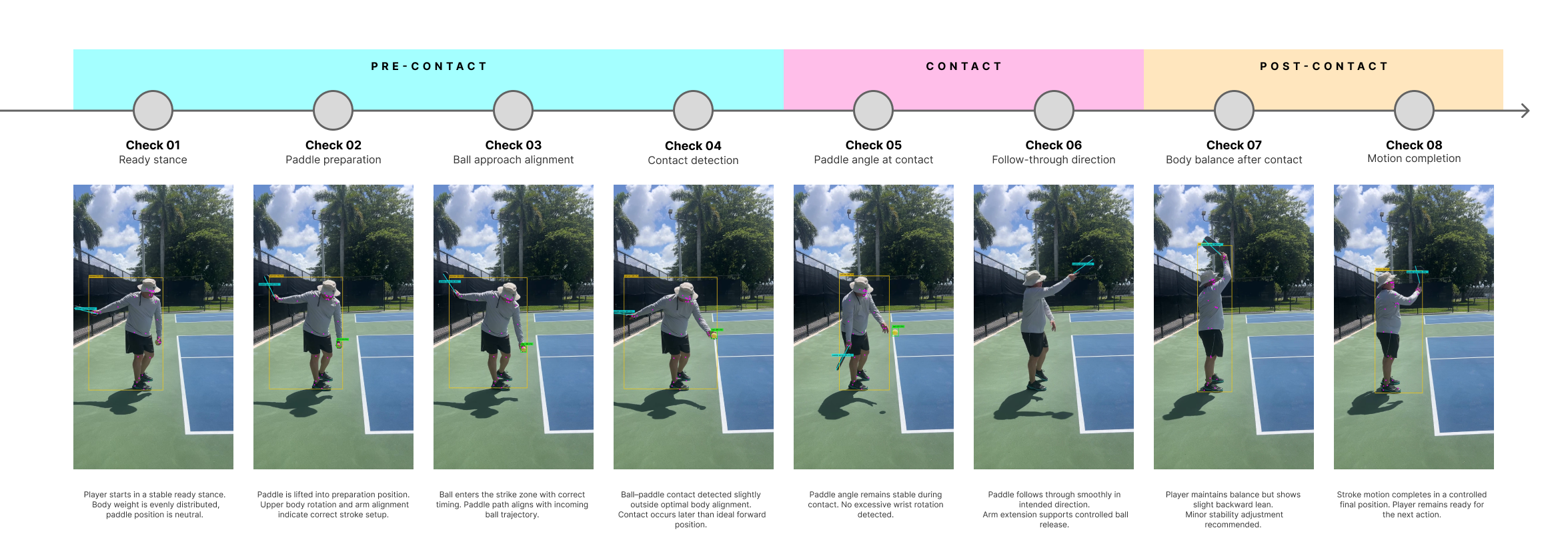
Read the full case study on our blog to see how this was implemented end-to-end.
2026 shift
In 2026, vertical SaaS wins by owning outcomes, not by layering generic AI on top of workflows.
Vertical SaaS platforms increasingly outperform horizontal solutions by embedding AI directly into industry-specific workflows. Domain-aware AI delivers measurable outcomes — automation, optimization, and decision support — rather than generic insights. Competitive advantage moves toward platforms that understand context, regulation, and operational nuance.
SaaS 2026 Trend #6: Data-as-a-Service Becomes Product Infrastructure
As AI matures with:
-
Clean, structured, versioned data becomes monetizable
-
Some SaaS platforms expose insights, signals, or benchmarks as services
This shows up as:
-
Usage-based data APIs
-
Aggregated industry intelligence
-
AI-ready datasets embedded into platforms
Key driver for your business:
AI value is constrained by data quality and availability — not model sophistication.
Data now functions simultaneously as infrastructure and product. Clean, versioned, and governed data enables AI execution, supports compliance, and becomes monetizable itself. SaaS platforms that treat data as a strategic asset unlock new revenue models and sustain AI performance at scale.
SaaS 2026 Trend #7: Security, Compliance, and Trust Move Up the Funnel
Security is no longer a late-stage sales concern. Enterprise buyers now evaluate:
-
AI governance
-
Model transparency
-
Data lineage
-
Auditability of automated decisions
At SaaStr, multiple sessions highlighted: If you can’t explain how your AI works, you won’t pass procurement.
2026 implication
In 2026, security, transparency, and governance directly influence purchasing decisions. Buyers expect AI systems to be explainable, auditable, and compliant by design. As a result, governance capabilities move from internal controls to product features that differentiate SaaS platforms in enterprise markets.
SaaS 2026 Trend #8: Voice and Multimodal Interfaces Enter Core Workflows
Voice-activated SaaS is moving beyond novelty:
- Internal ops
- Reporting
- Field workflows
- Accessibility-driven design
Combined with Vision AI and conversational interfaces, SaaS products are becoming:
- Less screen-dependent
- More context-aware
- More continuous
User interaction with SaaS platforms extends beyond dashboards and forms. Voice, natural language, and contextual inputs allow users to interact operationally with systems. Multimodal interfaces reduce friction, accelerate workflows, and require AI systems tightly integrated with real-time context and execution layers.
Final Thought
Reality Check: Most AI is still not in production.
Despite growing investment, only a minority of SaaS platforms operate AI reliably at scale today. Most organizations remain stuck between pilots and production due to architectural debt, unclear ownership, and weak execution discipline.
The gap between AI experimentation and AI infrastructure is widening. By 2026, competitive advantage will favor teams that close this gap early — by designing platforms for orchestration, observability, and continuous execution.
The next generation of SaaS:
- Runs continuously
- Orchestrates AI quietly
- Delivers outcomes, not features
The companies that win in 2026 won’t talk the loudest about AI. They’ll be the ones whose systems simply don’t break when AI shows up.
If 2026 is the year your SaaS must operate AI at scale — not just demo it. Talk to our team.
Need Custom SaaS Development?
Let's explore cooperation opportunities
FAQ
What are the top AI trends shaping SaaS in 2026?
In 2026, AI in SaaS is shifting from experimental pilots to production-ready capabilities. Key trends include workflow orchestration, automation at scale, personalization driven by real-time data, and domain-specific AI in vertical SaaS delivering measurable business outcomes.
How can SaaS companies scale AI from experiment to production?
SaaS companies scale AI by adopting modular architectures, building robust and governed data pipelines, and embedding AI workflows into core product operations. Orchestration platforms such as n8n help manage automation, retries, and reliability as AI usage grows.
What role does data play in modern SaaS platforms?
In modern SaaS, data functions as both product and infrastructure. Clean, versioned, and compliant data enables AI-driven features, supports analytics and personalization, and establishes trust and scalability across the platform.
How should SaaS teams be structured to support AI adoption?
SaaS teams supporting AI adoption should be data-first, combining data engineers, MLOps or LLMOps specialists, and domain experts. Tight collaboration between product, data, and AI teams accelerates delivery and improves time-to-value.
What prevents most SaaS companies from running AI in production?
Common challenges include inconsistent data quality, integration with legacy systems, regulatory and security requirements, and ensuring reliable AI behavior in production. These risks are mitigated through strong governance, observability, and production-ready tooling.
How does Ardas help companies implement AI in SaaS?
Ardas supports end-to-end AI implementation in SaaS, from architecture modernization and workflow orchestration to LLM integration, MLOps, and secure cloud deployment. We help SaaS teams move from AI concepts to scalable, production-grade platforms.
How can SaaS companies accelerate AI adoption effectively?
SaaS companies accelerate AI adoption by modernizing architecture, automating workflows, integrating LLMs responsibly, and deploying AI within secure, observable cloud environments designed for production scale.