
May 25, 2026
How to Choose AI Adoption Consultants for SaaS in 2026
Jun 15, 2026

Development
Key Insights
- Only 28% of AI use cases fully succeed and meet ROI expectations (Gartner, April 2026). Twenty percent fail outright, and the primary cause is typically architectural, rather than model quality.
- Post-PMF SaaS companies require a different AI partner than those suited for early-stage experimentation or enterprise transformation.
- AI adoption requires coverage across four areas: data readiness, MLOps infrastructure, product integration, and governance. Optimizing only one area while neglecting others will not advance your product.
- Execution-oriented consulting is defined by concrete deliverables: production deployment, observability from the outset, named ownership for each component, and runbooks that function independently of the consultant.
- Ghost ownership and black-box AI are the two most common operational liabilities. Named individual accountability and full IP ownership are baseline requirements, not differentiators.
- In regulated industries, compliance architecture must be established from the outset. Data governance should be in place before developing AI features, not after a production failure.
Most post-PMF SaaS companies do not struggle to find AI adoption consultants; they struggle to distinguish between those who deliver only strategy and those who implement production-ready solutions.
The market is crowded. Every firm now has an "AI transformation" practice and/or strategy. The terminology is almost identical across all of them — strategy, roadmap, pilot, scale — but the outcomes are radically different. A wrong hire at this stage doesn't just delay your AI plans. It creates a technical and organizational debt that can take 12 months to unwind.
This guide from Ardas cuts through that. It covers how to define your scope before the first vendor call, what specific deliverables to demand, the selection criteria that separate consultants who know how to advise from those who know how to ship, and the red flags that look like confidence until they don't.
Quick Checklist
- Define your primary constraint and document your scope.
- Ask for concrete, testable deliverables tied to each project milestone.
- Check for experience delivering production systems in your industry, not just strategy.
- Verify there is a clear governance model with named ownership for every AI component.
- Confirm production monitoring and incident response protocols are included from day one.
- Demand clear terms on IP ownership to avoid vendor lock-in.
- Watch for warning signs: phase-based deliverables, focus on models before data, or references only from large enterprises.
What Is AI Adoption Consulting — and What It Isn't
AI adoption consulting is the structured process of evaluating an organization's readiness, defining an AI integration roadmap, and delivering the engineering, governance, and operational changes needed to move from pilot to production. It is not a technology demo. It is not a report that recommends a shortlist of tools. And it is not a workshop series that leaves your team to figure out implementation alone.
For post-PMF SaaS companies specifically, AI adoption consulting sits at the intersection of four disciplines: data readiness, ML/AI engineering, product integration, and governance. A consultant who only covers one of these areas will not move your product forward. They will optimize one layer while the others remain the bottleneck.
"The gap between a working pilot and a production-grade system is almost always architectural — not model quality."
The single most expensive mistake in this process is starting vendor conversations before you know what problem you're actually solving. There are four categories of need. Most organizations have elements of all four, but one usually dominates. Identifying your primary constraint will determine what kind of consultant you actually need.
| Category | What It Means |
|---|---|
| Data readiness | Your AI use cases are blocked by fragmented, inconsistent, or ungoverned data. Before any model can do useful work, you need a unified data model, clear domain ownership, and a source of truth that the AI can trust. If you skip this, every layer built on top becomes unreliable exactly when it matters. |
| MLOps and delivery infrastructure | You may have a use case and data, but lack a repeatable process for training, deploying, monitoring, and retraining models. Without this, AI features become unsustainable experiments. CI/CD pipelines, drift detection, rollback capabilities, and observability must be established before release. |
| Product integration | AI capabilities may exist but are not integrated into user flows where they add value. The primary challenge is architectural — identifying which product areas benefit from AI, determining required latency and reliability, and introducing AI incrementally without disrupting existing functionality. |
| Governance and compliance | In regulated industries or at scale, AI outputs can pose significant business or legal risks. Human-in-the-loop reviews, audit trails, data exposure controls, and incident playbooks are essential. The key issue is not capability, but defensibility when issues arise. |
Before contacting vendors, document your primary constraint. Ask each consultant how they have addressed this specific issue for companies at your stage. For example, you might ask:
- Can you describe a recent project where you solved a similar constraint for a SaaS company at our scale?
- What obstacles did you encounter and how did you address them?
- What deliverable did you provide that ensured this constraint was resolved before moving to the next phase?
Concrete questions like these make it easier to compare consultants' real-world experience with your unique needs.
A consultant's output defines the relationship. Vague deliverables produce vague outcomes. The following are the concrete deliverables that distinguish execution-oriented AI consulting from advisory-only engagements.
Discovery and Scoping
| Data architecture assessment | A written assessment of your current data architecture, identifying gaps and ownership issues before any AI layer is proposed |
| Acceptance criteria | Documented acceptance criteria for each AI use case, including edge cases, failure modes, and integration dependencies |
| Risk register | A risk register covering security exposure, compliance constraints, and data quality issues that will affect model reliability |
Technical Delivery
| Production deployment | Model or AI feature deployed to production — not a sandbox or demo environment |
| Observability | Logs, metrics, and traces tied to every AI-assisted change, from day one |
| CI/CD pipeline | Automated CI/CD pipeline for AI features, including regression coverage and rollback procedures |
| Incident runbooks | Runbooks for incident response that don't require the development team's AI conversation history to execute |
Governance Layer
| Named ownership | Ownership assignment for every AI component — named individuals, not teams |
| Escalation paths | Documented escalation paths for when AI outputs are wrong or ambiguous |
| Access controls | Data access controls and audit trail configuration relevant to your compliance requirements |
Ongoing Operations
| Drift monitoring | Monitoring protocol for model drift and performance degradation |
| Continuous improvement | Retrospective framework that converts production incidents into updated rules and test coverage — so the system tightens over time rather than accumulating debt |
If a consultant cannot commit to these deliverables, they are offering advisory services rather than AI adoption. Both have value, but they are distinct engagements at different price points.
Advisory consulting is typically priced as short-term strategy workshops or fixed-scope reports, with fees tied to analysis and recommendations. Execution-oriented consulting usually has a higher price tag because it covers full-cycle implementation, production deployment, ongoing support, and concrete deliverables your team can operate after the engagement ends. Budget accordingly and make sure you understand which service you are purchasing.
Criterion 1
Do they distinguish between data maturity levels?
A consultant worth working with will assess your data readiness before proposing a solution. If the first conversation jumps to model selection or tool recommendations before they understand your data architecture, that's a problem.
The interface comes last. The foundation comes first.
Criterion 2
Have they shipped in your industry?
Regulated industries such as fintech, healthcare, and logistics have compliance requirements that fundamentally shape AI system design. Audit trails, data residency, human-in-the-loop reviews, and approval workflows are essential architectural elements. Request a specific case study in your sector, not just a general industry list.
Criterion 3
What does their governance model look like?
Ask directly: "Who owns each AI component after your engagement ends?" If the answer is unclear, ghost ownership may result, leading to operational issues. Ensure there is named accountability for every change, with support and debugging possible without prior AI conversation context.
To further safeguard long-term maintainability, request a detailed handover plan before the engagement closes. This should include comprehensive documentation of each system component, demos or training sessions for your engineering team, escalation procedures for post-engagement incidents, and agreed channels for ongoing support, even if only on an advisory basis.
These steps help ensure your team is equipped to operate, monitor, and evolve the system independently after the consultant leaves.
Criterion 4
Do they bring production observability, not just models?
Any consultant can deploy a model, but long-term reliability is critical. Ask about their standard monitoring setup, alerting thresholds, and rollback procedures. If they cannot provide specific answers, they are focused on launch rather than ongoing reliability.
Criterion 5
Do they have a framework for governing AI codegen internally?
Consultants who use AI in their own delivery process and maintain a governed, documented operating model will better understand your challenges than those who only recommend tools. Ask how their engineering team uses AI-assisted development and what safeguards are in place. This is the criterion that exposes the gap fastest. A partner who has never governed AI codegen in their own shop is theorizing; one who has is speaking from scar tissue.
At Ardas, AI-assisted development runs against the same controls we'd design for a client — named ownership on every merged change, review gates that don't wave through unverified output, and an operating model documented closely enough that a new engineer can follow it without reverse-engineering anyone's prompt history. This is the standard to require from any partner, including us: not just AI usage, but the ability to provide a documented framework for its application.
Red Flags to Watch For
Warning Signs
- They prioritize model selection. The initial focus should be on your data and use case, not on which language model they use.
- Deliverables are described by phases rather than outcomes. A project plan listing phases is not sufficient; you need specific, testable outcomes at each milestone.
- The pilot does not transition to production. A pilot not intended for production is merely a paid proof of concept that creates pressure to proceed. Confirm production deployment is included before signing.
- There is no mention of ownership or incident response. If the engagement plan lacks a governance model and runbooks, the consultant is not considering post-delivery operations.
- References are only from large enterprises. Post-PMF SaaS companies have different constraints than Fortune 500 enterprises — faster iteration cycles, smaller teams, tighter margins between what AI saves and what it costs to maintain. References from companies at your stage are more predictive than enterprise logos.
What Operationalizing AI in Products Actually Requires
The WEF and Accenture's "From Potential to Performance" report (Davos, January 2026) states that leading organizations are not those with more AI tools, but those that have redesigned roles, processes, and delivery systems to ensure AI output is reliable and accountable. For post-PMF SaaS companies, AI adoption should be approached as a systems challenge rather than a technology issue.
The right consultant will help redesign operational layers to support AI, not merely implement it. In practice, that looks like:
- Testable requirements before any model is deployed — so AI amplifies correct direction rather than scaling wrong assumptions.
- Named ownership for each AI component — not team ownership, but individual accountability that survives the engagement.
- Automated verification gates, including linting, type-checking, testing, building, and integration, enforced consistently regardless of deadlines.
- Production monitoring implemented from the outset, rather than added after incidents occur.
- A continuous improvement loop, where each issue leads to new rules, tests, or procedures, ensuring the system improves rather than accumulates technical debt.
"Leading organizations are not those with more AI tools — but those that have redesigned roles, processes, and delivery systems to ensure AI output is reliable and accountable."
Case Study: AI Transformation for a Regulated Healthcare Platform
A major Scandinavian medical publisher engaged Ardas after achieving product-market fit, seeking to scale digital infrastructure to manage over 7,000 medical documents across multiple countries while meeting stringent healthcare data governance requirements. The engagement consisted of two phases.
The first established a modern digital foundation: a cloud content hub built with .NET and React, deployed on Azure, featuring the necessary data architecture and access controls for regulated medical content.
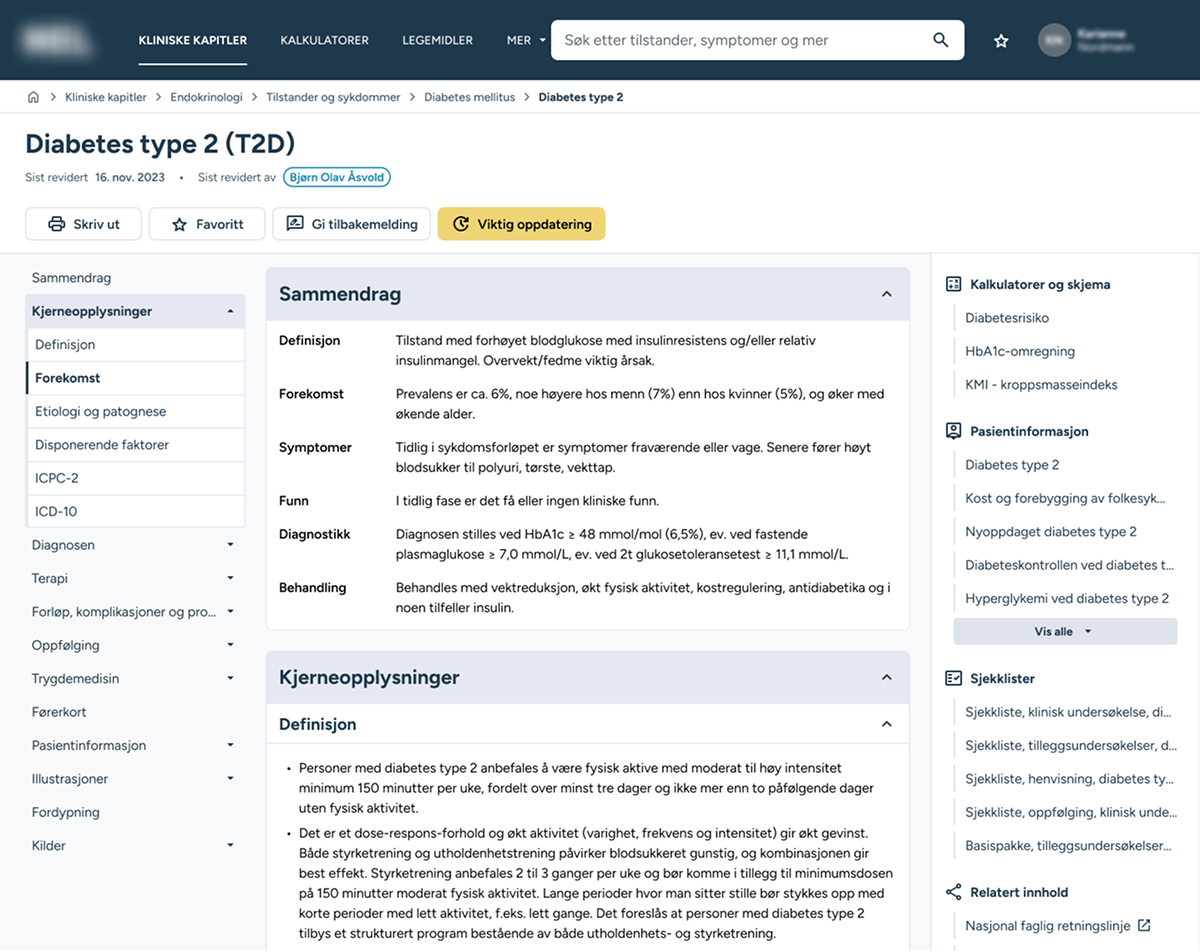
Phase two, the AI transformation, began only after the foundation was stable. The team deployed a Q&A chatbot for medical professionals, a multi-agent system for content operations, and n8n-based workflow automation. With a clean and well-governed data layer, AI features operated reliably from the initial production release onward.
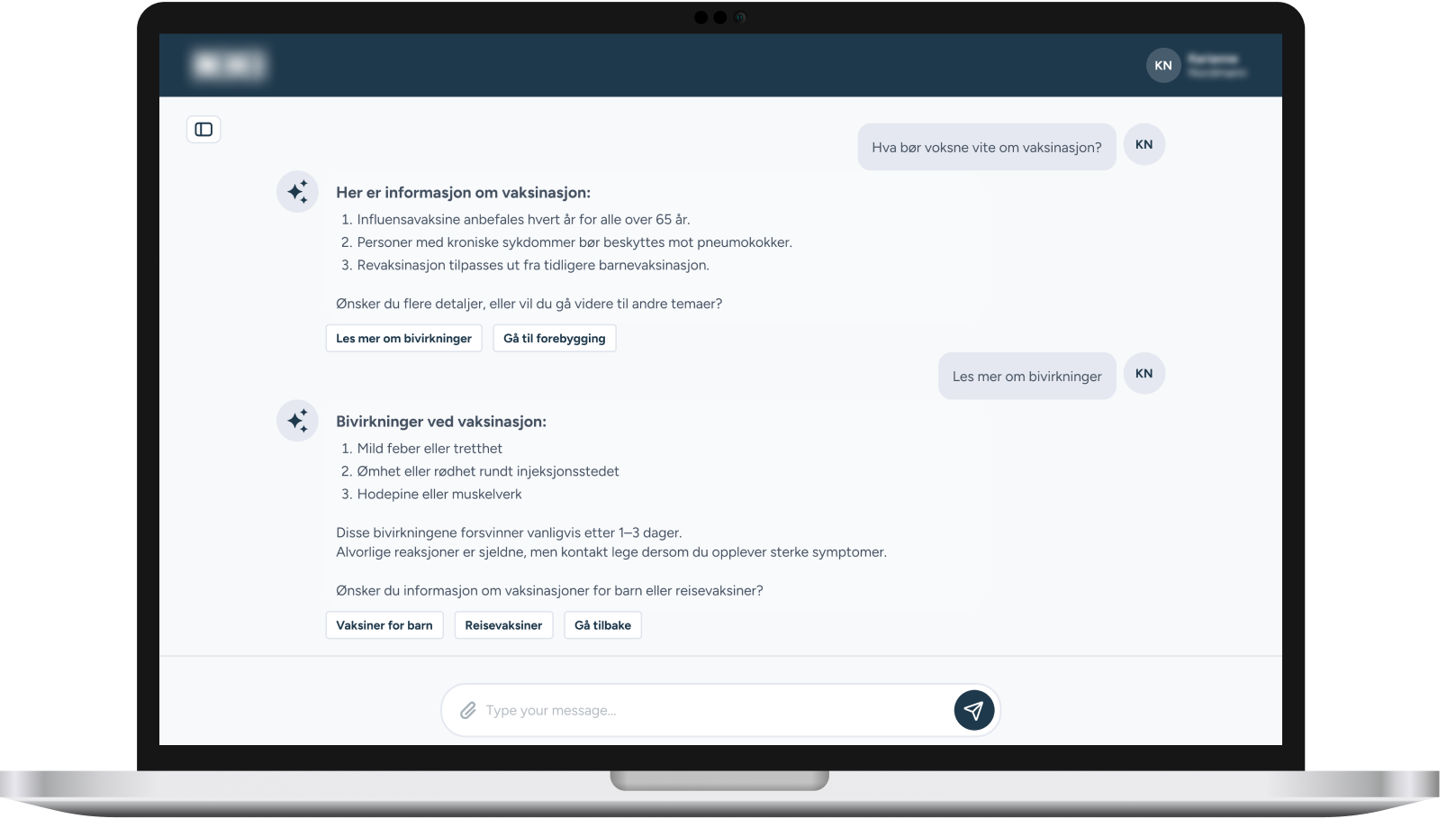
This sequencing was intentional and strategic. Building the AI layer on an ungoverned data foundation would have resulted in unreliable outputs, particularly when accuracy was most critical for healthcare professionals.
Read the full case study for details.
How Ardas Approaches AI Adoption Consulting
Ardas is an AI-first software development partner with over 20 years of experience delivering complex SaaS platforms for post-PMF companies. We are ISO 9001- and ISO 27001-certified and an n8n Expert Partner.
Delivery phases
- Requirements intelligence before coding
- Governed AI-assisted development with named ownership
- Automated CI/CD verification with regression coverage
- Production monitoring with incident playbooks from day one
What you retain
- 100% IP ownership
- No black-box AI
- No data exposure
- No vendor lock-in
Industries served
- Fintech
- Healthcare
- Logistics
- MarTech and related sectors
If you are evaluating AI adoption partners, begin with a workflow audit. You can get started with a quick self-assessment before reaching out to consultants by mapping your data sources and ownership, identifying any current manual workarounds in your delivery process, listing where governance and compliance checks occur (or are missing), and writing down your current incident response plan — even if it's informal.
This preparation gives you clarity on your groundwork and helps you ask more targeted questions in the first conversation. We assess your current data architecture, delivery process, and governance model, providing a prioritized remediation plan within five business days.
Evaluating AI adoption partners?
Start with a workflow audit. We assess your data architecture, delivery process, and governance model — and deliver a prioritized remediation plan within five business days.
Talk to Ardas About AI AdoptionSummary: Selection Criteria at a Glance
| Criteria | What to Ask |
|---|---|
| Data readiness assessment | Do they evaluate your data foundation before proposing AI features? |
| Industry-specific references | Can they show a case study in your vertical, not just your industry category? |
| Governance model | Who owns each AI component after the engagement ends? |
| Production observability | What monitoring is a standard deliverable, not an optional add-on? |
| Incident response | Can your team debug a production failure without the consultant's AI context? |
| Deliverable specificity | Are outcomes defined and testable, or defined by phases and activities? |
| Pilot-to-production commitment | Is production deployment in scope, or just a pilot? |
The AI adoption consulting market will continue to grow in 2026. Companies that make informed choices now will build production systems that increase in value, while those that do not may spend the next year correcting foundational issues.
Related reading
- SaaS 2026 Trends: From AI Experiments to Production-Ready Platforms
- Building Vision AI Into Production
What is AI adoption consulting for SaaS companies?
It's the structured process of assessing readiness, defining an integration roadmap, and delivering the engineering, governance, and operational changes needed to move AI from pilot to production. For post-PMF SaaS companies, that means covering four things together: data readiness, AI engineering, product integration, and governance — not just one.
Why do most AI pilots fail to reach production?
Gartner's April 2026 survey found only 28% of AI use cases fully meet ROI expectations, with 20% failing outright. The cause is rarely the model — it's missing data foundations and governance. The gap between a working pilot and production is architectural: no observability, no rollback path, no clear owner.
What should AI adoption consulting deliverables include?
Concrete, testable outputs — not just advisory hours. That means a data architecture assessment, a model actually deployed to production, CI/CD with rollback, named ownership per component, and a drift-monitoring protocol. If a consultant can't commit to these, they're selling advice, not adoption.
What are the biggest red flags when evaluating AI consultants?
They lead with model selection before understanding your data. Deliverables are vague "phases," not testable outcomes. The pilot isn't scoped to reach production. There's no mention of ownership or incident response. And their references skew toward large enterprises rather than post-PMF companies like yours.
How does AI strategy for SaaS differ from enterprise AI transformation?
You have paying customers and no tolerance for a six-month discovery phase. SaaS AI adoption is about production reliability at speed — enterprise transformation is about organizational change at scale. Different constraints, different deliverables.
What does operationalizing AI in products actually require?
Testable requirements before deployment, named individual ownership (not team ownership), automated verification gates enforced regardless of deadlines, production monitoring from day one, and a feedback loop where every incident becomes a new rule or test.
Why does IP ownership matter when choosing an AI consulting partner?
Black-box AI creates dependency — every improvement, audit, and incident puts you at the mercy of the vendor. Full ownership of model weights, training data, and decision logs is the only foundation for long-term independence. Confirm this in the contract before signing.
How can Ardas help post-PMF SaaS companies with AI adoption?
Ardas is ISO 9001 and ISO 27001 certified, with 20+ years shipping custom software and production-grade AI for post-PMF SaaS companies and enterprises. Every client keeps 100% IP ownership, no black-box AI, no vendor lock-in.
Table of content
See also
Mar 27, 2026